

Your Long-Term Roofing Investment
Litchfield County’s rolling hills and historic New England architecture invite a different kind of roof. Whether you own a colonial farmhouse in Litchfield, a cape in Southbury, or a modern lake-side home in Kent, you need a roof that endures harsh winters, humid summers, and nor’easters. Standing seam metal roofing is that solution. With concealed fasteners and interlocking panels, it offers unmatched durability, energy efficiency, and a timeless look. As a local contractor, Ellis Builders LLC takes pride in installing these premium roofs for homeowners and commercial property owners across Litchfield County.
Key Takeaways
- Definition – Standing seam metal roofing uses vertical panels joined by raised seams that conceal the fasteners. Panels can be snap-lock or mechanically seamed for superior weather-tightness.
- Built for New England weather – Metal roofs shed snow quickly, resist ice dams, and withstand high winds up to 140 mph. They remain watertight during the region’s freeze-thaw cycles and reduce the weight of wet snow on the structure.
- Long lifespan & ROI – A standing seam roof typically lasts 50–80 years. Studies show it recoups 85–95% of its cost and can increase home value by 1–6%.
- Energy efficiency – Metal roofs reflect up to 70% of the sun’s energy and can reduce cooling costs by 40%.
- Low maintenance – Because fasteners are concealed, there are no exposed screws to back out or rust. A metal roof requires minimal maintenance compared with asphalt and wood.
- Local expertise – Ellis Builders is based in Southbury and serves the whole of Litchfield County with craftsmanship, warrantied materials, and a deep understanding of local building codes and historic district requirements.
What Is Standing Seam Metal Roofing?
Standing seam metal roofing features vertical panels (often 12–20 inches wide) that run from the eaves to the ridge. The seams rise above the panel surface and conceal the clips or screws that hold the panels to the roof deck. This design differentiates it from exposed-fastener metal roofing and asphalt shingles in several key ways:
Concealed Fasteners
Traditional corrugated metal roofs expose screws through the panel surface. Those screws penetrate the panels, creating potential leak points as washers degrade. Standing seam systems hide the fasteners under raised seams or ribs, protecting them from weather and UV exposure. This concealed system allows the metal to expand and contract freely during temperature swings without loosening screws.
Snap-Lock vs. Mechanically Seamed Panels
Snap-lock panels have male and female legs that “snap” together. They are easier and less expensive to install and suitable for pitches over 3:12. However, they are not recommended for low slopes or heavy snow loads because the seam can open under extreme conditions.
Mechanically seamed panels use concealed clips and are crimped together with a single-lock (90°) or double-lock (180°) seam. Double-lock seams are preferred for snow-country and low-slope roofs because they form a watertight joint and resist high winds and heavy snow better than snap-lock systems. Mechanical seams cost more but offer superior protection and longevity.
Panel Profiles, Gauges & Finishes
Standing seam panels come in different profiles (e.g., vertical rib, trapezoidal, structural). Gauges typically range from 22 to 26, with thicker steel offering greater resistance to hail and wind but higher cost. Finishes include painted steel (Galvalume coated), aluminum, copper, and zinc. In coastal or high-salt environments, aluminum or zinc resists corrosion better than steel. Many homeowners in Litchfield County choose a matte charcoal or forest green finish to blend with colonial and farmhouse architecture.
Why Concealed Fasteners Matter
Exposed-fastener roofs may be cheaper up front, but their thousands of screw penetrations can lead to leaks, rust, and frequent maintenance. Standing seam roofs have fewer penetrations and are often eligible for weathertight warranties, whereas exposed-fastener systems rarely are.
Why Standing Seam Is Ideal for Litchfield County Homes
Designed for Heavy Snow & Ice
Litchfield County winters bring 20–30 inches of snow and frequent nor’easters. Connecticut building codes require roofs to withstand 30 lbs per square foot of snow load. Metal panels have smooth surfaces that shed snow quickly, reducing accumulation and the risk of roof collapse. Fresh snow weighs 5–7 lbs per sq ft, but wet snow and ice can reach 30–60 lbs per sq ft. Because metal warms from sunlight and the attic below, snow slides off before it turns to ice, decreasing freeze-thaw damage and ice dam formation.

Durable Through Freeze-Thaw Cycles
Repeated freezing and thawing can crack asphalt shingles and penetrate underlayment. Metal doesn’t absorb water and expands uniformly, preventing cracks and splits. The smooth panels keep moisture from penetrating, and an ice-and-water shield underlayment further protects vulnerable eaves and valleys. Proper ventilation and insulation also reduce heat loss that causes ice dams.
Wind Resistance During Nor’easters
Nor’easters can bring gusts of 80–100 mph, yet standing seam panels interlock and anchor firmly. According to manufacturers, metal roofs can withstand winds up to 140 mph or more, which far exceeds typical asphalt shingle ratings. In coastal storms or when tree branches fall, metal’s rigid panels distribute impact loads without tearing.
Longevity vs. Asphalt & Wood
Standard asphalt shingles in New England last 20–25 years and often require replacement after major storms. Standing seam roofs last 50–80 years and, when made from copper or zinc, can exceed a century. A metal roof recoups 85–95% of its cost and may increase resale value by 1–6%. Because homeowners avoid two or three asphalt replacements over the life of a standing seam roof, the long-term cost becomes lower than cheaper materials.
Energy Efficiency in Hot & Cold Seasons
Standing seam metal roofs are among the most energy-efficient roofing materials. Reflective coatings can reflect up to 70% of solar energy, keeping attic temperatures cooler by up to 50°F compared to dark shingles and reducing air-conditioning demand. During winter, proper insulation prevents heat loss through the roof while the metal reflects radiant heat back into the home. Systems installed on battens can improve energy efficiency by 48.7% compared with asphalt shingles.
Perfect for Historic and Modern Architecture
Litchfield County abounds with colonial farmhouses, saltboxes, and Victorians. Standing seam roofs complement these styles by following traditional rooflines with a clean, low-profile appearance. Panels can be finished in muted colors that mimic slate or lead and are lighter than slate or tile, reducing stress on older framing. Local historic districts, such as the Borough of Litchfield, require Certificates of Appropriateness for exterior changes and often approve standing seam roofs because the concealed fasteners maintain historic character.
Standing Seam vs. Other Roofing Options
The table below compares standing seam metal roofs with asphalt shingles, exposed-fastener metal roofing, slate/architectural shingles, and stone-coated metal. Costs are approximate and vary by materials, slope, and labor. Lifespans assume proper installation and maintenance.
| Roofing Material | Typical Lifespan | Maintenance & Durability | Installed Cost Range* | ROI & Value | Aesthetic Compatibility |
|---|---|---|---|---|---|
| Standing seam metal | 50–80 years; copper/zinc 100+ | Minimal; concealed fasteners reduce leaks; resists snow, wind and fire | $9–12 per sq ft in CT; total $20K–34K for average home | 85–95% cost recouped; increases home value 1–6% | Modern or traditional; colors and profiles suit colonials, farmhouses & modern designs |
| Asphalt shingles | 20–25 years | Moderate; prone to wind uplift, algae and ice dams; requires periodic replacement | $3–6 per sq ft; low upfront cost | Low ROI; may not increase value; multiple replacements over time | Wide range of colors; common on new builds but may lack distinction |
| Exposed-fastener metal | 20–40 years; shorter due to screw deterioration | High; thousands of exposed screws require tightening and replacement; leak potential | $3–6 per sq ft (corrugated) | Moderate ROI; lower cost but shorter life; limited warranties | Rustic or industrial; suitable for barns, outbuildings |
| Slate / architectural shingles | 50–200 years (natural slate) | Low; heavy weight requires reinforced structure; brittle if walked on | $15–30 per sq ft (natural); synthetic or composite lower | High resale value; premium appearance | Ideal for historic or high-end homes; heavy weight may limit use |
| Stone-coated steel | 50+ years | Low; combines steel with ceramic granules; durable and fire-resistant | $8–12 per sq ft | Good ROI; similar longevity to standing seam but slightly higher cost | Classic shake or tile appearance; suits rustic homes |
*Costs represent installed prices in Connecticut and can vary based on roof size, slope, removal of old roofing, panel profile, and metal type.
Standing Seam Metal Roof Cost in Litchfield County
Local Pricing Ranges
Installing a standing seam metal roof costs more upfront than asphalt but pays dividends over its long life. In West Hartford (representative of Litchfield County), a 1,282 sq ft standing seam roof costs $8,807–11,650 – about $7–10 per sq ft. Most homeowners in Connecticut pay $9–12 per sq ft installed, or $20K–34K for a typical 2,000–2,500 sq ft home. Costs for corrugated steel (exposed fastener) run $3–6 per sq ft but come with shorter lifespans and lower warranties.
Materials and Panel Types
- Steel (Galvalume) – Most common; costs $10–16 per sq ft installed. Galvalume coatings enhance corrosion resistance.
- Aluminum – Lighter and corrosion-resistant; $11–17 per sq ft. Ideal near saltwater or acidic environments.
- Copper and zinc – Premium metals; $25–40 per sq ft. Develop attractive patina; last over 100 years.
- Snap-lock vs. mechanical – Snap-lock systems cost $8–14 per sq ft for materials. Mechanically seamed panels require additional labor but provide improved weather protection.

Additional Cost Factors
- Roof size & complexity – Steeper pitches and intricate dormers require more time and safety equipment. Snow guards, valley flashings, and ridge vents add material and labor.
- Tear-off vs. retrofit – Removing an existing roof adds disposal and labor. Some metal roofs can be installed over a single layer of shingles, but local codes and manufacturer guidelines vary.
- Insulation & underlayment – Ice-and-water shield in valleys and along eaves is essential to protect against ice dams. High-temperature synthetic underlayment reduces condensation and extends deck life.
- Labor & expertise – Skilled crews are crucial. Labor typically runs $150–300 per square. Because mechanical seaming requires specialized tools, choose an experienced contractor like Ellis Builders.
Financing & Lifetime Value
Although expensive upfront, standing seam roofs can eliminate two or three asphalt shingle replacements. With an expected life of 50–80 years and high energy savings (up to 40% reduction in cooling costs), homeowners see a lifetime investment. Many lenders offer home-improvement loans or HELOCs, and some local utility programs provide rebates for energy-efficient metal roofs. Consult with Ellis Builders to discuss financing options.
Installation Process – Craftsmanship at Every Step
A proper standing seam installation requires meticulous planning. Ellis Builders follows a step-by-step process to ensure longevity and warranty compliance:
- Initial inspection & evaluation – Evaluate the existing roof’s structure, pitch, and ventilation. Identify any rot, structural weaknesses, or code issues.
- Tear-off or preparation – Remove old roofing if necessary. Inspect and repair decking; rotten sheathing is replaced to ensure a solid foundation.
- Drip edge and eave preparation – Install metal drip edges along eaves and rakes to channel water away from fascia boards.
- Ice & water shield – Apply a peel-and-stick ice-and-water membrane in valleys, along eaves, and around penetrations. This barrier prevents leaks during freeze-thaw cycles and complies with Connecticut code.
- Synthetic underlayment – Cover remaining decking with a high-temperature synthetic underlayment to protect against condensation and provide a slip-resistant surface.
- Panel layout & fabrication – Measure roof dimensions, account for thermal expansion, and fabricate panels on-site or in a shop to the required lengths. Choose snap-lock or mechanical seams based on slope and weather exposure.
- Panel installation – Begin at the eaves. Secure the first panel with concealed clips or cleats. Continue up the roof, interlocking seams and ensuring each panel is plumb and square. Mechanically seamed panels are crimped with a single- or double-lock seam for maximum weather-tightness.
- Flashing & ventilation – Install custom flashings at valleys, hips, ridge vents, chimneys, and skylights. Ensure proper ventilation to mitigate condensation and heat buildup.
- Snow guards & accessories – Add snow guards where required to control sliding snow and protect walkways. Install gutters, downspouts, and leaf guards.
- Final inspection & cleanup – Inspect seams, flashings, and fasteners. Clean up debris and perform a walk-through with the homeowner. Provide maintenance guidance and warranty documentation.
A professional installation ensures your roof qualifies for manufacturer warranties. Poor workmanship can void warranties and compromise performance. Ellis Builders’ crews have specialized training in mechanical seaming and are familiar with local codes, historic district requirements, and Litchfield County’s severe weather conditions.
Common Metal Roofing Myths (Debunked)
Myth 1: “Metal roofs are loud in rain or hail.”
When installed over proper sheathing and insulation, metal roofs are no louder than asphalt shingles. Modern systems include solid decking and underlayment that dampens sound. Attic insulation further muffles rain and hail noise.
Myth 2: “Metal roofs attract lightning.”
Metal does not increase the likelihood of a lightning strike; it is noncombustible and disperses electrical charge safely if struck. In fact, metal roofs provide extra fire protection compared with wood shingles.
Myth 3: “Metal roofs rust easily.”
Galvalume steel, aluminum, copper, and zinc panels have protective coatings that resist rust and corrosion. With proper maintenance, rust is rare. For coastal areas or acid rain zones, aluminum and zinc offer enhanced corrosion resistance.
Myth 4: “Metal roofs dent easily.”
Standing seam panels made from 24-gauge or 22-gauge steel resist hail and falling branches. Even when dented, the metal remains watertight. Many panels carry impact-resistance ratings.
Myth 5: “They don’t fit historic homes.”
Standing seam roofs complement historic architecture with their simple lines and ability to replicate the look of lead or terne metal. Local historic commissions often approve them when installed in subdued colors and when proportions match original rooflines.
Myth 6: “Metal roofs can’t be installed over shingles.”
In some cases a standing seam roof can be installed over a single layer of asphalt shingles, which reduces tear-off costs and landfill waste. However, the roof deck must be sound, and local codes and manufacturer guidelines must be followed. A qualified contractor will advise whether a tear-off is necessary.
Myth 7: “Metal roofs aren’t energy-efficient in winter.”
A properly insulated metal roof reflects radiant heat back into the home, reducing heat loss. The attic temperature remains more stable, and snow slides off before forming ice dams.
Residential & Specialty Applications
Historic Farmhouses & Colonials
Litchfield County is dotted with historic farmhouses, saltbox homes, and colonials. Standing seam roofs respect these properties by maintaining historic lines and reducing structural weight. Panels finished in muted grays or greens complement clapboard siding and stone chimneys. Because they shed snow quickly, they prevent heavy drifts from accumulating on old rafters.
Capes, Cottages & Modern Homes
For capes and cottages, a metal roof delivers curb appeal and modern functionality. In modern architecture, the clean lines of standing seam panels accentuate contemporary design. Matte black or dark bronze panels pair well with natural wood siding and large glass expanses.
Barns & Outbuildings
Many Litchfield County properties include barns, sheds, and outbuildings. Standing seam roofs provide protection for livestock and equipment with minimal maintenance. Snow guards prevent dangerous slides, and the steel panels resist wind uplift better than corrugated barn roofing.
Light Commercial Properties
Small offices, bed-and-breakfasts, and retail shops benefit from the longevity and low maintenance of standing seam roofing. The sleek appearance can enhance brand image while reducing long-term operating costs.
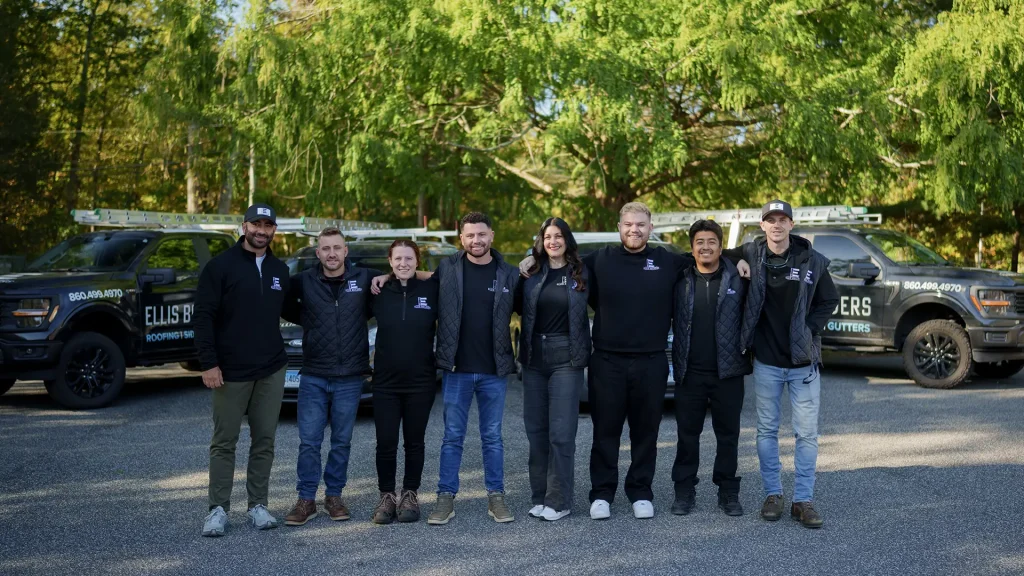
Why Homeowners Choose Ellis Builders
- Local roots & reputation – Ellis Builders LLC is based in Southbury and has served homeowners across Litchfield County for years. Our owner-operated company relies on word-of-mouth referrals and repeat customers.
- Craftsmanship – We use premium materials and insist on mechanically seamed panels for maximum weather-tightness in snow-country applications. Our crew members are trained in metal roofing techniques and safety protocols.
- Reliability & communication – We handle all permits, coordinate with historic commissions where necessary, and keep you informed from estimate to completion. We show up on schedule and finish the job with minimal disruption.
- Warranty protection – We partner with top manufacturers to offer 20–40-year material warranties and provide our own workmanship warranty. Because we install to manufacturer specifications, your roof qualifies for full warranty coverage.
- Comprehensive services – Beyond standing seam roofing, we install gutters, downspouts, snow guards, skylights, and ventilation systems. We also offer roof inspections, maintenance, and repairs.
Signs It’s Time to Upgrade to Standing Seam
- Your asphalt roof is 15–20 years old and showing signs of curling, granule loss, or leaks.
- You experience frequent ice dams or leaks despite proper attic insulation and ventilation.
- You plan to stay in your home long-term and want to avoid future roof replacements.
- Your home has historic or high-value architecture, and you desire a roof that complements its style and maintains property value.
- You seek energy savings and improved comfort year-round.
- You’re concerned about wind damage, snow loads, or fire risk and want the most durable option available.
If these indicators resonate, a standing seam roof may be the right investment.
Frequently Asked Questions
How long does a standing seam metal roof last in Connecticut?
With proper installation and maintenance, a steel or aluminum standing seam roof in Connecticut typically lasts 50–80 years, and copper or zinc systems can last over a century.
Is a standing seam roof worth the cost for Litchfield County homeowners?
Yes. Despite higher upfront costs, standing seam roofs recoup 85–95% of their investment and may increase resale value by 1–6%. They eliminate multiple asphalt replacements, reduce maintenance, and lower energy bills, making them a financially sound choice for long-term homeowners.
Can a metal roof handle heavy snow and ice?
Absolutely. Metal panels shed snow quickly, reducing weight. Fresh snow weighs 5–7 lbs per sq ft, but wet snow and ice can reach 30–60 lbs per sq ft. Standing seam roofs are designed to handle Connecticut’s 30 lb per sq ft snow load requirement.
Will a metal roof make my home noisier during rain or hail?
No. When installed over solid decking and insulation, metal roofs produce sound levels comparable to asphalt shingles. Proper underlayment and attic insulation dampen noise.
Does a metal roof attract lightning?
No. Metal roofs do not increase the likelihood of a lightning strike. They are noncombustible and safely disperse electrical charges if struck.
Can a standing seam roof be installed over existing shingles?
Sometimes. A metal roof can be installed over one layer of shingles if the deck is sound and local codes permit. However, many homeowners opt for a tear-off to ensure a flat substrate and install high-temperature underlayment.
Are metal roofs allowed on historic homes or in HOAs?
Yes, provided they meet design guidelines. The Borough of Litchfield’s Historic District requires a Certificate of Appropriateness for exterior changes. Ellis Builders has experience working with historic commissions to select colors, panel widths, and trims that blend with period architecture. Some HOAs may specify color or profile but often approve standing seam because of its minimal visual impact.
How energy-efficient is a metal roof?
Standing seam roofs reflect up to 70% of solar energy and can reduce cooling costs by 40%. When installed on battens, they improve overall energy efficiency by 48.7% compared with asphalt shingles.
What maintenance does a standing seam roof require?
Maintenance is minimal. Inspect the roof annually for debris, clean gutters, and ensure snow guards and flashings remain secure. Because fasteners are concealed, you won’t need to tighten screws. Periodic cleaning can maintain finish longevity, but no special treatments are required.
Does a metal roof rust?
Modern metal roofs use Galvalume steel, aluminum, copper, or zinc with protective coatings. Rust is rare when panels are properly installed and maintained. Coastal homes may prefer aluminum or zinc for enhanced corrosion resistance.
How much does a standing seam roof cost in Litchfield County?
Most homeowners pay $9–12 per sq ft installed. A typical 2,000–2,500 sq ft roof costs $20K–34K. Material type (steel, aluminum, copper), panel profile, pitch, tear-off, insulation, and labor all influence the final price.
Will a metal roof increase my home’s value?
Yes. Studies show standing seam metal roofs can increase home value by 1–6%. Buyers appreciate the longevity, low maintenance, and energy efficiency.
Ready to Upgrade? – Schedule Your Free Inspection
Whether you’re planning a renovation for a historic home or building a modern farmhouse, a standing seam metal roof offers unmatched durability, energy efficiency, and timeless style. Ellis Builders LLC is ready to help you evaluate your roof, understand your options, and provide a detailed estimate. We serve all of Litchfield County, including Litchfield, Southbury, Kent, Woodbury, Morris, Washington, and beyond.
Call today at (203) 707-2866 to schedule a free inspection and discover how a standing seam roof can protect your home for decades.