Key Takeaways
- Ellis Builders provides custom EPDM, TPO, metal, and silicone roofing systems for Connecticut businesses using premium GAF and Owens Corning products.
- For a commercial roof project, compare the existing roof condition, proposed system, installation scope, maintenance needs, and written warranty terms.
- Ellis Builders serves Connecticut and Western Massachusetts, including New Haven, Fairfield, and Litchfield counties. Contact the team to confirm availability for your property.
Commercial Roofing Solutions Built for Connecticut’s Climate
Connecticut commercial roofs face snow, rain, wind, and seasonal temperature changes. Evaluate the roof system for the building’s drainage, structural condition, use, and applicable local requirements.
Review the permit, roof-assembly fire-rating, wind, load, insulation, and drainage requirements that apply to the property. The local building department and selected product instructions help define the project requirements.
Our Commercial Roofing Services
Each business has unique roofing needs. Ellis Builders offers a full range of systems tailored to Connecticut’s climate and commercial codes.
EPDM Roofing
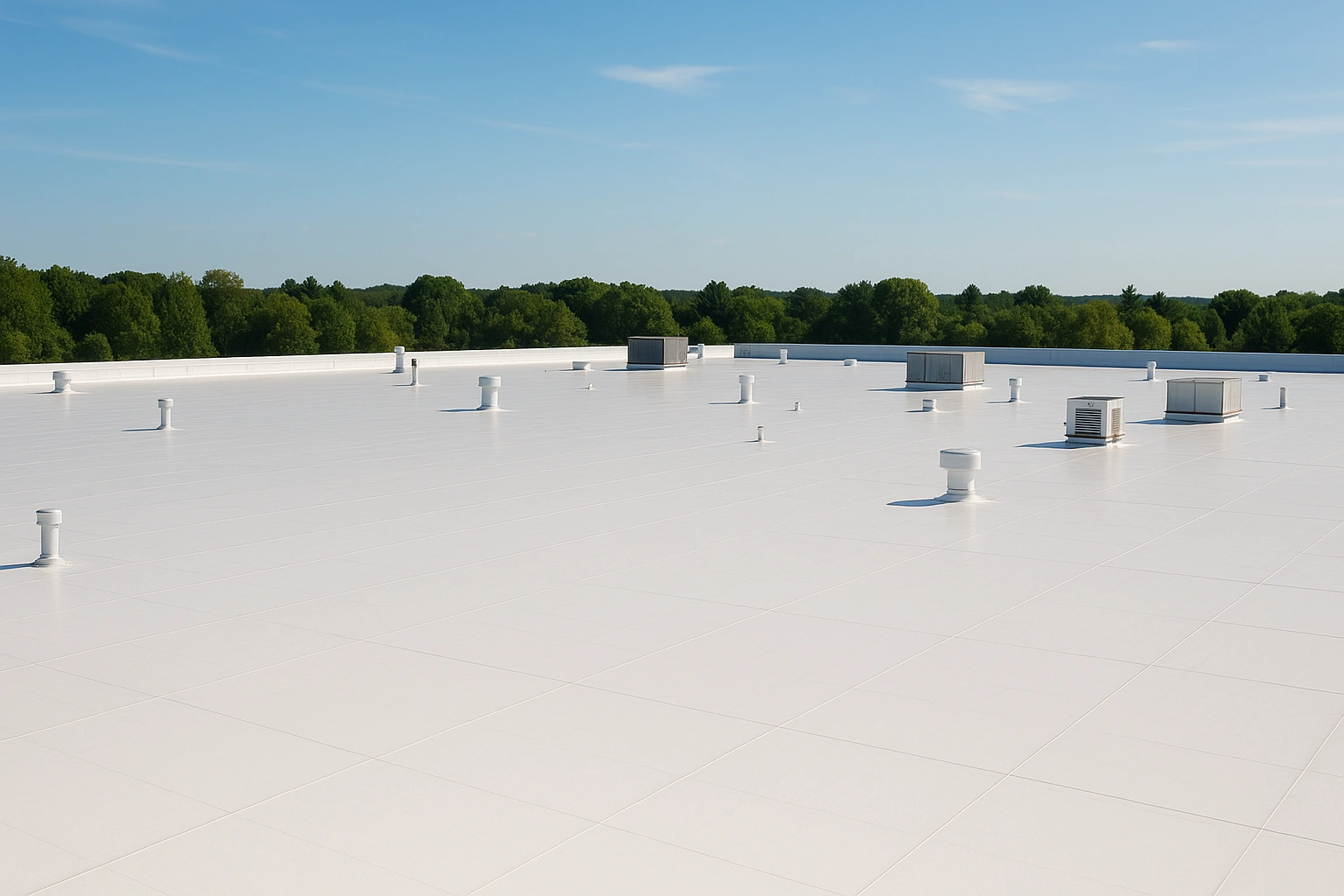
EPDM is a single-ply membrane used on many low-slope roofs. Compare membrane thickness, attachment, seam details, insulation, drainage, and maintenance requirements for the building.

TPO Roofing
TPO is a single-ply membrane available in reflective colors. Suitability depends on the product, attachment, insulation, drainage, and details at seams and penetrations.
Standing Seam Metal Roofs
Standing seam metal roofs use interlocking panels with concealed attachment. Compare panel material, finish, slope requirements, flashing, and snow-management details for the building.
Silicone Roof Coatings
A silicone coating may be an option for a roof that meets the manufacturer’s substrate and preparation requirements. Moisture, adhesion, seams, drainage, and underlying damage need evaluation before coating.
Repairs and Maintenance
Routine inspections and maintenance can help identify developing roof concerns. Ask about a schedule suited to your roof system, exposure, drainage, and use.
The Ellis Builders Process
1. Consultation and Assessment
We start with a on-site consultation to evaluate your roof’s condition, structure, and drainage needs.
2. Custom Proposal
You’ll receive a clear proposal detailing materials, timelines, and costs — including comparisons of EPDM, TPO, metal, and coatings based on your building’s requirements.
3. Expert Installation
The installation scope should identify the selected roof system, preparation, attachment, flashing, drainage, and applicable product and building requirements.
4. Final Inspection and Warranty
Review the completed scope and obtain the product, maintenance, and warranty documents that apply to your project.
5. Ongoing Maintenance
Ask about inspection and maintenance options, including drainage, seams, flashings, and roof penetrations.
Why Businesses Choose Ellis Builders
- Material Selection: Compare products suited to the roof slope, exposure, and building use.
- Local Expertise: Our family-owned company understands Connecticut’s climate and regulations.
- Project Experience: Ask for examples of comparable commercial roofing work.
- Warranty and Payment Terms: Review written product coverage and any lender terms before committing.
- Comprehensive Service Area: Covering New Haven, Fairfield, and Litchfield Counties, plus Western Massachusetts.
- Customer Care Commitment: Transparent communication, clean worksites, and honest service.
Understanding Connecticut Building Codes
Commercial roof projects can involve permit, fire-rating, wind, structural-load, insulation, and drainage requirements. Confirm requirements with the local authority and identify permit responsibilities in the scope.
Connecticut’s Weather Challenges
From icy winters to humid summers, Connecticut roofs endure it all.
- Winter: Heavy snow and ice dams cause leaks and gutter blockages.
- Summer: Heat and UV exposure dry out shingles and membranes.
- Storms: High winds and hail can lift or puncture materials.
A robust system — like metal roofing or high-impact shingles — protects your property year-round. July 2025 storms across Waterbury demonstrated why strong, well-built roofs are essential for business continuity.
Service Areas and Specializations
Ellis Builders is based in Southbury, CT, serving:
New Haven County
Ansonia, Beacon Falls, Bethany, Derby, Middlebury, Naugatuck, Orange, Oxford, Seymour, Southbury, Woodbridge.
Fairfield County
Bethel, Brookfield, Danbury, Easton, Monroe, New Fairfield, Newtown, Redding, Ridgefield, Shelton, Sherman, Trumbull.
Litchfield County
Bethlehem, Bridgewater, Litchfield, Morris, New Milford, Roxbury, Torrington, Washington, Watertown, Woodbury.
We specialize in flat and low-slope systems, commercial shingles, metal roofing, and coating overlays, as well as siding and gutters.
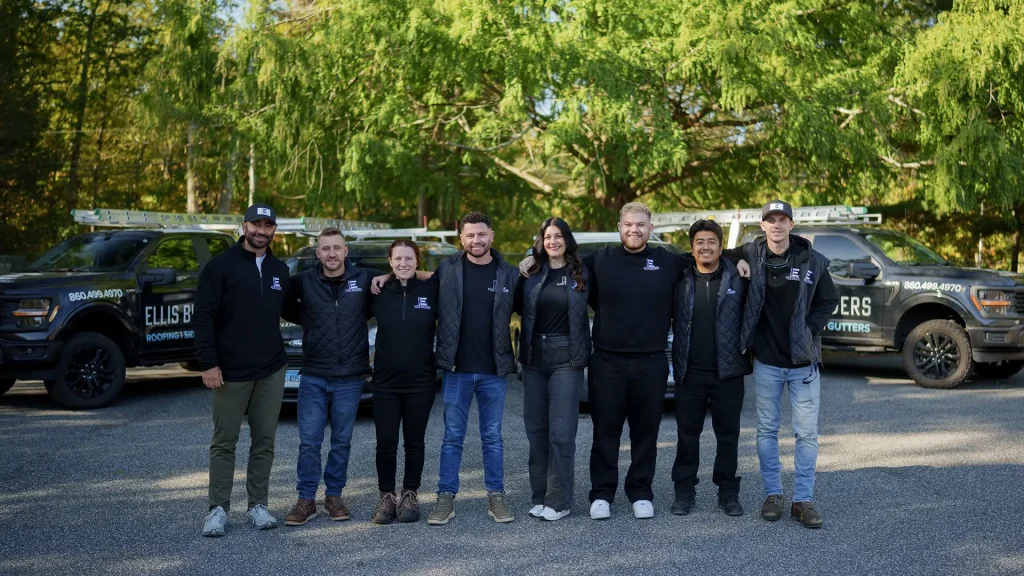
Meet Our Team
- Nick Ellis – Founder & Owner
- Shawn Morris – Vice President of Sales
- Tyler Gregory – Production Manager
- Noordadeen El-Massri – Office Support Lead
- Rick Uva, Noelle King, Jake Vittorini – Sales Team
Ask who will coordinate your project, communicate schedule changes, and answer questions about scope or materials.
Commercial Roofing Planning Examples
- Distribution facilities: Coordinate roof access, loading areas, interior protection, and drainage with daily operations.
- Manufacturing buildings: Review roof penetrations, equipment access, insulation, and exposure before selecting a membrane.
- Multifamily buildings: Compare localized repairs, coating suitability, and replacement based on documented roof condition.
Ask for recent project references and review feedback relevant to your building type and proposed roof system.
Frequently Asked Questions
What is the best material for flat commercial roofs in Connecticut?
EPDM and TPO are common low-slope options. Product choice depends on attachment, insulation, drainage, roof use, and details around equipment and penetrations.
How long does a commercial roof last?
Service life varies with product, installation, exposure, drainage, and maintenance. Evaluate present condition and review the selected manufacturer’s product guidance.
How often should a commercial roof be inspected?
Follow the selected roof system’s inspection and maintenance guidance and arrange a review after severe weather or visible changes. Frequency depends on the roof and property.
Do I need a permit to replace a commercial roof?
Yes — Connecticut requires permits, load calculations, and fire-rating compliance. Always hire a licensed local contractor.
Why choose a local contractor?
Local experience can help with weather exposure, permits, materials, and site access. Confirm availability and project responsibilities before scheduling work.
What should I do after storm damage?
Stay safe, document the damage, and schedule an inspection immediately. Avoid climbing damaged roofs or working near downed lines.
Conclusion: Protect Your Investment
A commercial roof is your building’s first line of defense. With aging infrastructure and unpredictable weather, quality roofing isn’t optional — it’s essential.
Ellis Builders helps property owners compare commercial roofing options, including membranes, metal systems, and coating suitability. A site assessment and written scope provide the basis for project planning.
Contact Ellis Builders to discuss your commercial roof, current concerns, and the information needed for a project estimate.