
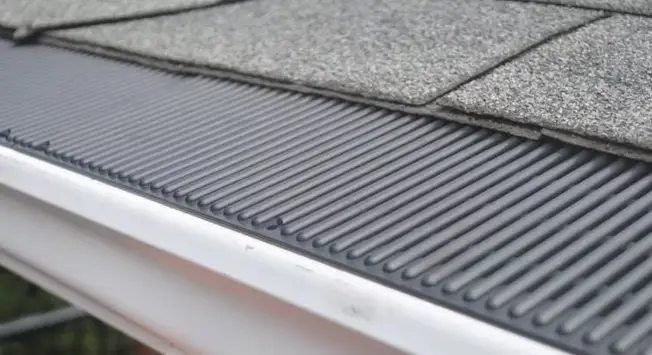
Gutter guards can be a smart upgrade for the right Connecticut home, but they are not magic. Some systems cut cleaning time dramatically, while others underperform when the roof sheds pine needles, seed pods, wet leaves, or winter buildup that behaves differently than the sales brochure suggests.
This guide helps homeowners understand when gutter guards are worth the investment, what conditions they work best in, and how to tell whether the bigger issue is really the guard system or the overall drainage setup.
Gutter Guards at a Glance
- Gutter guards can reduce debris buildup, cleaning frequency, and overflow risk, but they do not eliminate maintenance entirely.
- Performance depends heavily on tree type, roof pitch, gutter shape, and how much seed, leaf, and needle debris the home collects.
- Some guards handle leaves well but struggle with pine needles, roof grit, or winter edge buildup.
- The best guard system still needs properly pitched gutters, good downspout flow, and healthy roof-edge drainage details.
- A poor gutter setup will not become a great one just because a guard was added on top.
| Situation | Are Guards Usually Worth It? | Why |
|---|---|---|
| Heavy leaf and seed debris from mature trees | Often yes | Reducing clogs and overflow can save repeated seasonal cleaning and roof-edge stress |
| Pine needle-heavy property | Sometimes | Needle performance varies by product and requires more careful product choice |
| Minimal tree cover and easy gutter access | Maybe not essential | Regular manual cleaning may already be manageable |
| Recurring overflow and drainage issues | Only if the gutter system is otherwise sound | Bad pitch, loose gutters, or weak downspouts still need repair |
| Homes prone to winter edge buildup | Helpful but not a complete ice solution | Guards can support drainage, but attic and roof conditions still matter |
The best way to judge gutter guards is to ask whether they solve the actual debris and drainage problem your home has, not the generic problem shown in a marketing photo.
When gutter guards help the most
Gutter guards tend to make the biggest difference on homes with consistent debris load. If your gutters fill every fall, overflow in spring, or constantly trap leaves around roof valleys and downspout entries, guards can reduce how often the system needs hands-on cleaning and how likely water is to back up at the roof edge.
Where gutter guards underperform
Not every home gets the same result. Fine pine needles, wet roof grit, seeds, and shingle granules can still create maintenance needs depending on the guard style and the roof above it. That is why product choice and site conditions matter more than hype.
- Homes with constant pine needle load may need more selective guard styles.
- Poorly pitched gutters can still overflow even with guards installed.
- Downspout bottlenecks remain a problem if the guard does not address the full drainage path.
- Winter edge buildup can still create roof and gutter stress if attic and roof conditions are weak.
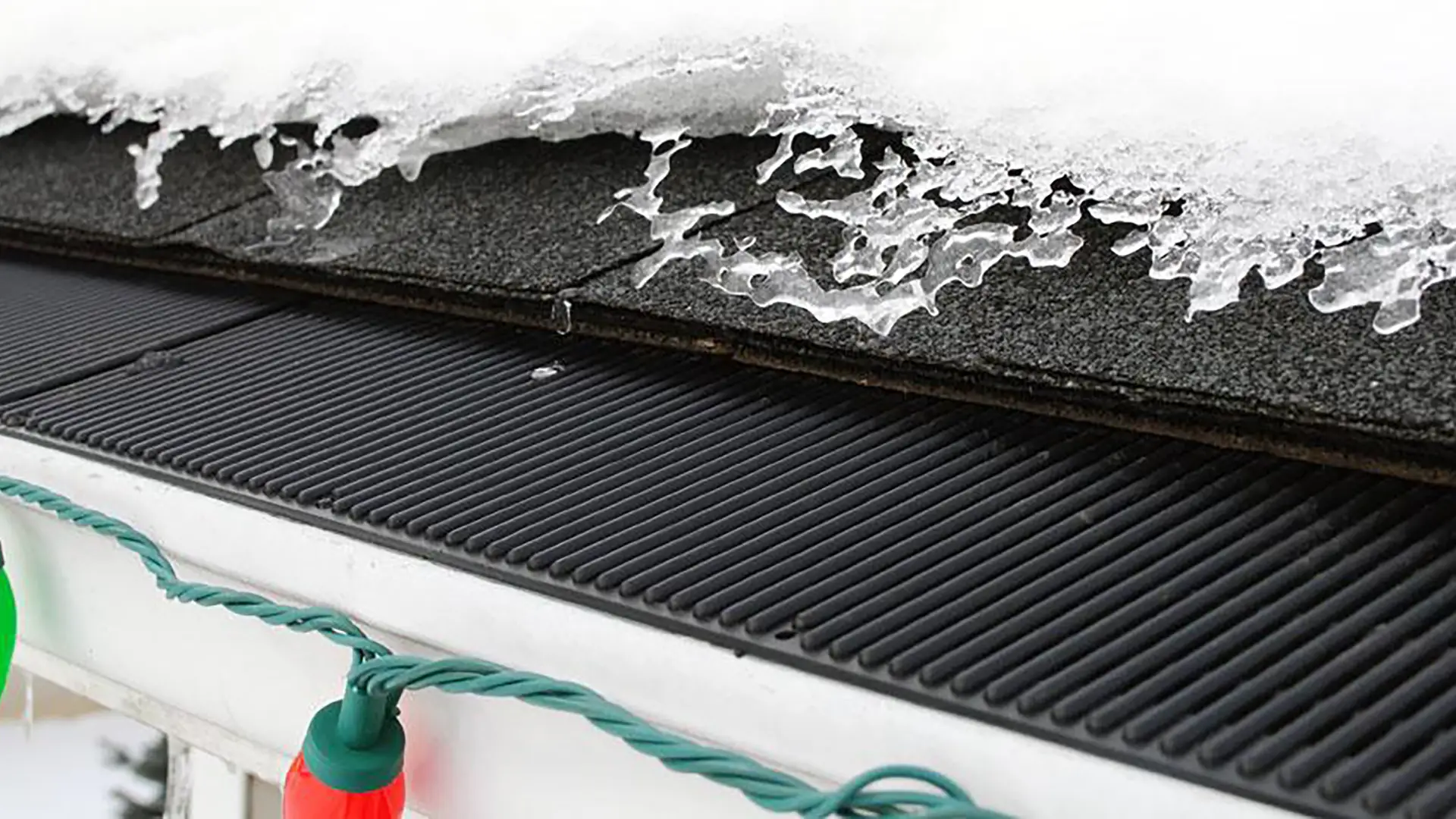
Think about the full drainage system
A guard system works best when the gutters themselves are in good shape. If the gutters are loose, undersized, sagging, or draining poorly, guards may reduce surface debris while leaving the underlying performance issue in place.
That is why homeowners should compare this topic with the company’s gutter services and the older New Haven-focused gutter articles already on the blog. The strongest results usually come from pairing the right guard system with a properly functioning gutter system.
How gutter guards connect to roof performance
Overflowing gutters do not just make a mess. They can shorten the life of fascia, push water toward soffits and siding, and create roof-edge moisture issues that become much more serious over time. On some homes, guard performance also overlaps with winter drainage and ice-dam behavior.
If winter problems are part of the conversation, this guide to ice dams in Connecticut is a helpful companion read.
What Ellis Builders helps homeowners evaluate
Ellis Builders helps Connecticut homeowners look at gutters as part of the broader exterior system. That includes guard suitability, gutter condition, roof-edge drainage, and whether fascia or roofing details should be addressed at the same time. If you want a cleaner way to compare options, the contact page is the best place to start.
Serving Homeowners Across Connecticut
Ellis Builders works with homeowners across Connecticut who want cleaner, more reliable gutter performance without constant seasonal overflow and debris buildup. Southbury and surrounding communities can start with the contact page or browse the full service areas page.
Frequently Asked Questions
Do gutter guards eliminate cleaning completely?
No. Good guards can reduce how often gutters need cleaning, but most systems still need occasional inspection and maintenance.
Are gutter guards worth it in pine needle areas?
Sometimes, but product choice matters more in those conditions. Some guard styles handle pine needles better than others.
Can gutter guards help with winter drainage?
They can help support cleaner flow, but they do not solve attic heat loss or all ice-related roof-edge issues on their own.
Should I install guards on old gutters?
Only if the gutters themselves are still in good shape. Sagging or poorly draining gutters should be corrected first.
Who installs gutter guards in Connecticut?
Ellis Builders can help homeowners evaluate gutter guard options and overall gutter performance. Call (860) 499-4970 or use the contact page.