Ice dams are one of the most frustrating winter roofing problems in Connecticut because they often start quietly and become expensive fast. A roof can look snow-covered and calm from the street while meltwater is already backing up under shingles and finding its way into ceilings, walls, and attic spaces.
The good news is that ice dams usually leave clues before the damage gets out of hand. This article explains how they form, what warning signs matter most, and which prevention steps actually help protect Connecticut homes through the freeze-thaw cycle.
Ice Dam Problems at a Glance
- Ice dams form when snow melts on a warmer upper roof surface and refreezes at the colder eaves.
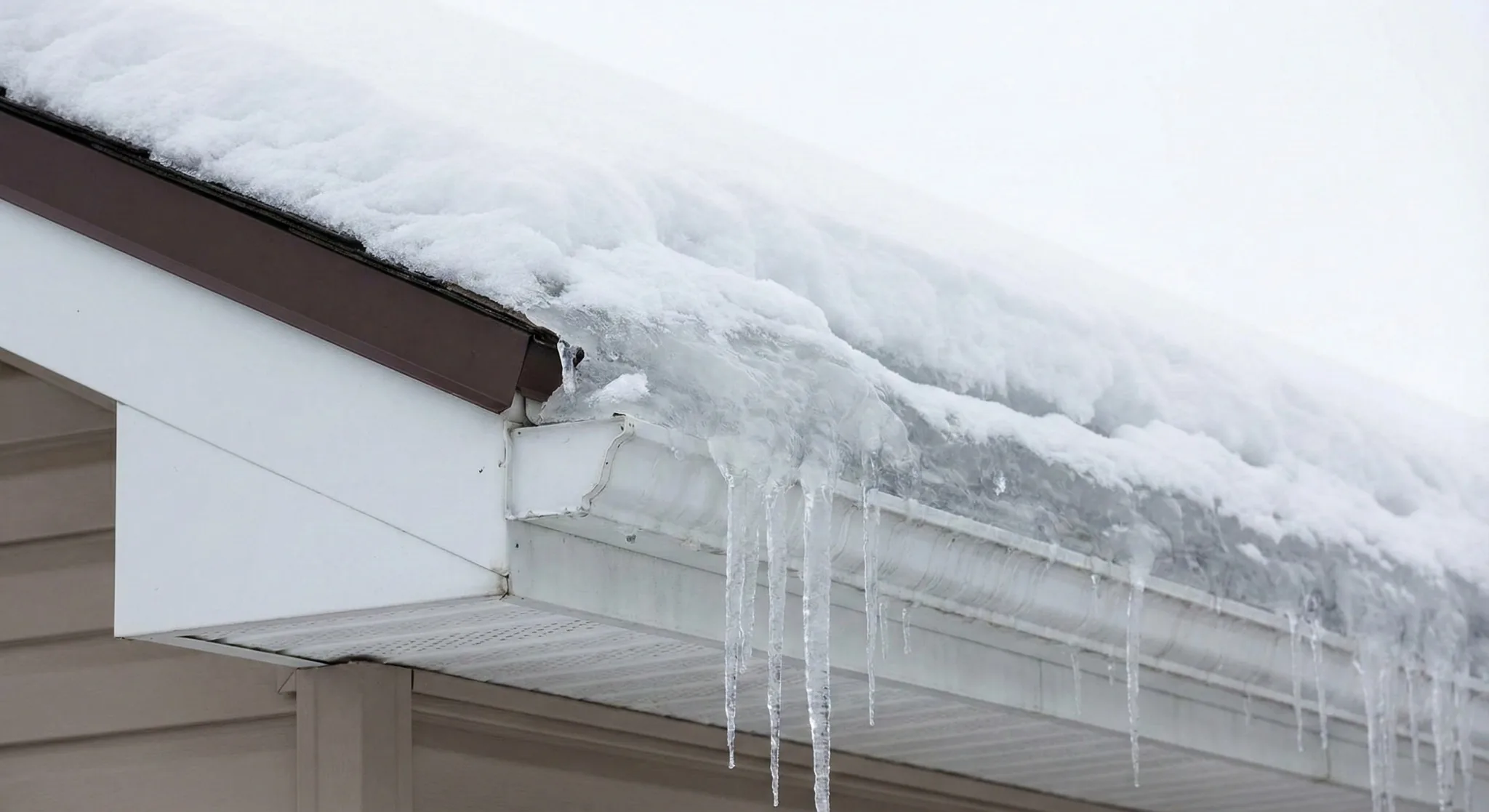
- Large icicles, stained ceilings, wet attic insulation, and bent gutters are all warning signs worth taking seriously.
- The visible ice at the edge is only part of the problem; trapped water can work under shingles and into the home.
- Ventilation, insulation, and drainage all influence whether a roof is likely to struggle each winter.
- Fast but careless removal methods can damage shingles, gutters, and roof edges even more.
| Warning Sign | What It Can Mean | Best Next Step |
|---|---|---|
| Heavy icicles at the eaves | Meltwater may be freezing at the roof edge instead of draining away | Check attic conditions and schedule an inspection if the pattern repeats |
| Water stains near exterior walls or ceilings | Meltwater may be backing up under the shingles | Protect interior finishes and investigate quickly |
| Sagging or pulling gutters | Ice weight may be stressing the gutter system and fascia | Avoid yanking ice off manually and have the area inspected |
| Wet or matted attic insulation | Warm air loss and moisture problems may be feeding the cycle | Review insulation and ventilation performance |
| Recurring winter leaks every season | The roof assembly may have a system-wide weakness | Plan a deeper roofing and drainage evaluation |
Ice dams are a symptom of heat loss, drainage trouble, and winter weather working together. Treating only the visible ice rarely solves the full problem.
How ice dams form on Connecticut homes
Connecticut winters create the exact freeze-thaw pattern that produces ice dams. Snow collects on the roof, warmer portions of the roof deck melt the bottom layer, and that water travels down toward colder overhangs and eaves where it refreezes.
Once a ridge of ice builds along the lower edge, new meltwater can no longer drain normally. Instead, it backs up behind the ice and starts looking for seams, nail penetrations, flashing gaps, or vulnerable shingle edges.
Early warning signs to take seriously
Homeowners often notice icicles first, but the more important clues are usually inside the house and attic. By the time paint bubbles, ceiling stains, or damp insulation appear, water has already gotten where it should not be.
- New stains at the top of walls or around ceiling corners.
- Wet attic insulation or a musty smell after snow events.
- Water dripping around skylights, chimneys, or exterior walls.
- Gutters pulling loose under the weight of ice buildup.
- The same winter leak returning after every major snow followed by a thaw.

Why ice dams damage more than shingles
The damage is not limited to the visible roof surface. Water that backs up under shingles can soak sheathing, stain drywall, weaken fascia, stress gutters, and leave moisture trapped in the attic long after the snow disappears.
That is why ice dam issues often overlap with gutter problems, flashing failures, and attic ventilation deficiencies. One winter leak can actually be a full exterior system problem in disguise.
Prevention strategies that actually help
No single trick solves ice dams on every house. The best prevention plan usually combines attic airflow improvements, better insulation, roof edge protection, and cleaner drainage.
- Improve attic insulation so interior heat is less likely to warm the roof unevenly.
- Make sure intake and exhaust ventilation are working together instead of trapping heat.
- Keep gutters flowing so meltwater has a clear exit path during warm spells.
- Trim branches and remove debris that trap snow and moisture on the roof.
- Address flashing weak points before winter exposes them under snow and ice.
When to call a roofing contractor
If water is entering the house, if gutters are straining under ice, or if the roof has a history of winter leaks, it is time for a real inspection. A contractor should be able to explain whether the problem is primarily insulation, ventilation, flashing, drainage, or an aging roof system that needs broader work.
Ellis Builders helps homeowners inspect roof edges, leak points, gutter conditions, and winter-related damage. If drainage is part of the issue, it is also worth reviewing the company’s gutter services so roof and drainage fixes stay aligned.
Serving Homeowners Across Connecticut
Ellis Builders serves homeowners across Connecticut who are dealing with winter roof leaks, attic moisture, gutter stress, and recurring ice dam issues. Southbury and surrounding communities throughout New Haven, Fairfield, and Litchfield County can start with the contact page or review broader service areas.
Frequently Asked Questions
Are icicles always a sign of an ice dam problem?
Not always, but large or repeated icicles can signal uneven roof temperatures and blocked drainage. They are worth paying attention to when they come with leaks or staining.
Can ice dams damage gutters?
Yes. Ice weight can bend, loosen, or pull gutters away from fascia, especially when drainage is already compromised.
Should I remove ice with a shovel or hammer?
No. Aggressive removal can break shingles, dent flashing, and create more problems. It is better to address the cause and inspect any damage carefully.
Will new shingles alone stop ice dams?
Not necessarily. Roof material helps, but ventilation, insulation, and drainage conditions also need to be part of the solution.
Who can inspect ice dam roof damage in Connecticut?
Ellis Builders can evaluate winter roof damage, roof edges, flashing, and drainage details. Call (860) 499-4970 or use the contact page to schedule an inspection.