

A lot of Connecticut homeowners call a roofer when they already suspect the answer but still hope the roof can be repaired one more time. That hesitation is understandable. A well-targeted repair can absolutely make sense on the right roof, but it can also waste money if the larger system is already failing.
This guide breaks down how to think through that decision clearly. If your roof is leaking, aging, or showing storm wear, use this framework to compare repair versus replacement based on condition, timing, and long-term value instead of guesswork.
Roof Repair vs. Replacement at a Glance
- A repair usually makes sense when damage is isolated, the roof is still relatively young, and the rest of the system is in good shape.
- Replacement becomes the smarter move when leaks show up in multiple areas, shingles are brittle or curling, or the roof is near the end of its service life.
- Connecticut weather often exposes hidden issues around flashing, roof edges, chimneys, skylights, and poorly ventilated attic spaces.
- The cheapest estimate is not always the lowest long-term cost if you are paying for the same problem every season.
- An in-person inspection is the fastest way to tell whether a repair buys useful time or just delays a bigger project.
| Condition | Most Likely Best Path | Why It Matters |
|---|---|---|
| One leak around a boot or flashing detail | Repair | If the rest of the roof is healthy, a targeted fix can restore the weak point without replacing the system. |
| A few shingles missing after one storm | Repair or partial section | Localized storm damage can often be handled without a full tear-off when decking remains sound. |
| Roof more than 20 years old with widespread wear | Replacement | Once age-related failure shows up across multiple slopes, repairs tend to become repetitive and short-lived. |
| Multiple leaks in different rooms | Replacement | That pattern usually points to broader system failure, not one isolated defect. |
| Regular patchwork every season | Replacement | Repeated repair bills often add up faster than homeowners expect and still leave the home exposed. |
A roof decision should be made on condition, not on hope. If the roof is broadly failing, the money saved by one more patch can disappear fast.
When a roof repair usually makes sense
Repairs are often the right move when the roof still has real life left in it. A newer asphalt shingle roof with one failed flashing detail, one lifted ridge cap, or one storm-affected area can often be repaired successfully without replacing the entire system.
This is especially true when the attic is dry, the shingles still have flexibility, and the damage pattern is limited to a specific section instead of showing up across the whole roof.
- The roof is relatively young and the shingles still lie flat.
- The leak traces back to one penetration, valley, or flashing transition.
- Storm damage is limited to one slope or one small impact area.
- There is no evidence of widespread decking rot, sagging, or moisture staining in multiple rooms.
Signs replacement is the smarter long-term move
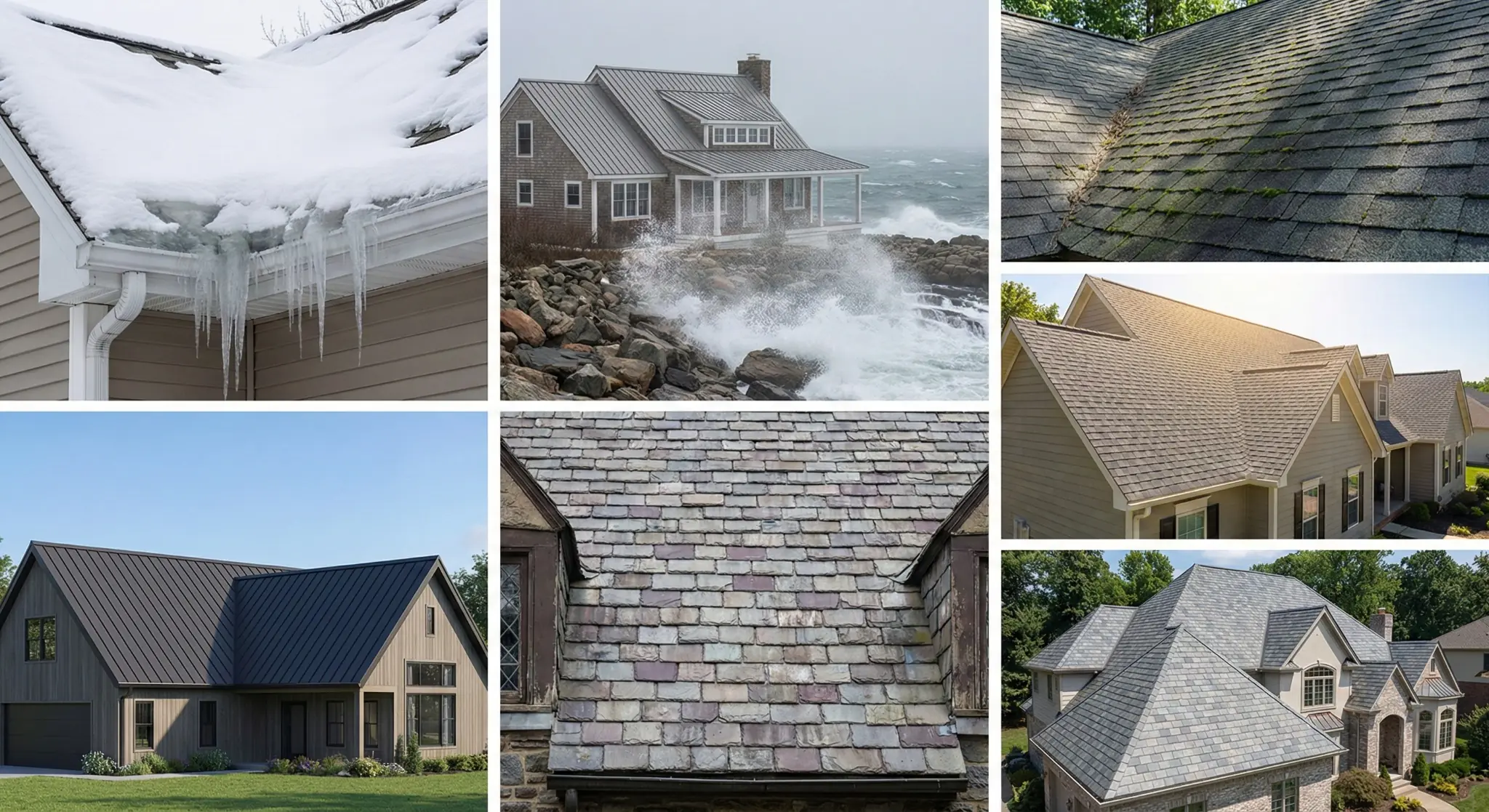
Replacement becomes the better financial decision when the entire roof system is aging out. Connecticut homes that have been through repeated snow load, wind exposure, ice dam cycles, and summer heat often reach a point where isolated fixes no longer solve the real problem.
If shingles are losing granules, tabs are creasing or curling, leaks keep returning, or several details have already been repaired, the roof may be telling you it needs a reset instead of another patch.
- Leaks appear in more than one area of the home.
- Shingles are brittle, bald, curled, or slipping out of place.
- Past repairs are scattered across several slopes and still not holding.
- Ventilation, flashing, drip edge, or gutter tie-ins all need attention at the same time.
Think about cost, not just price
A repair estimate can look attractive if you only compare the invoice in front of you. The better question is what the roof is likely to need over the next twelve to thirty-six months. If another leak, more shingle loss, or hidden decking repairs are right around the corner, a cheap repair can become the expensive option.
Homeowners planning for bigger work should also read the Connecticut roof replacement cost guide so they can compare short-term repair money against realistic replacement ranges.
Questions to ask during an inspection
A useful inspection should leave you with a clear recommendation and a reason behind it. If the contractor cannot explain why a repair will hold, or why replacement is necessary, you are not getting enough information.
- Is the issue isolated or showing up across several parts of the roof?
- How much service life is realistically left in the current material?
- Are flashing, ventilation, gutters, or roof edges contributing to the failure?
- Is hidden wood damage likely once the area is opened up?
- Will a repair keep the roof dependable through another Connecticut winter and storm season?
Do not evaluate the roof in isolation
A roof does not work alone. Gutters, flashing, attic ventilation, soffits, and drainage all affect how long the system lasts. A home with overflowing gutters or trapped attic heat may continue to develop roofing problems even after a technically correct repair.
That is why Ellis Builders looks at the bigger exterior picture. Homeowners comparing options can review roofing services, explore gutter services, and use the contact page to schedule an inspection that is based on the full system instead of a quick guess.
Serving Homeowners Across Connecticut
Ellis Builders works with homeowners across Connecticut, including Southbury and surrounding communities throughout New Haven, Fairfield, and Litchfield County. If you want a local starting point, visit the Southbury roofing page or browse broader service areas.
Frequently Asked Questions
How do I know if my roof needs repair or replacement?
If the issue is isolated and the roof is otherwise sound, repair may be enough. If leaks, wear, and failed details are spread across the roof, replacement is usually the better long-term move.
Is replacement always more expensive than repair?
Costs depend on the actual scope. Compare written estimates alongside roof condition, hidden repair needs, and the likelihood of further work.
Can storm damage be repaired without replacing the whole roof?
Sometimes. If the damage is limited and the remaining roof is in strong condition, a targeted repair or partial section may be possible.
Should I inspect my gutters too?
Yes. Poor drainage can create or worsen roof problems, especially around edges, fascia, and ice dam-prone areas.
Who can inspect my roof in Connecticut?
Ellis Builders can inspect the roof, explain whether repair or replacement makes more sense, and help you plan the next step. Call (860) 499-4970 or use the contact page to get started.