
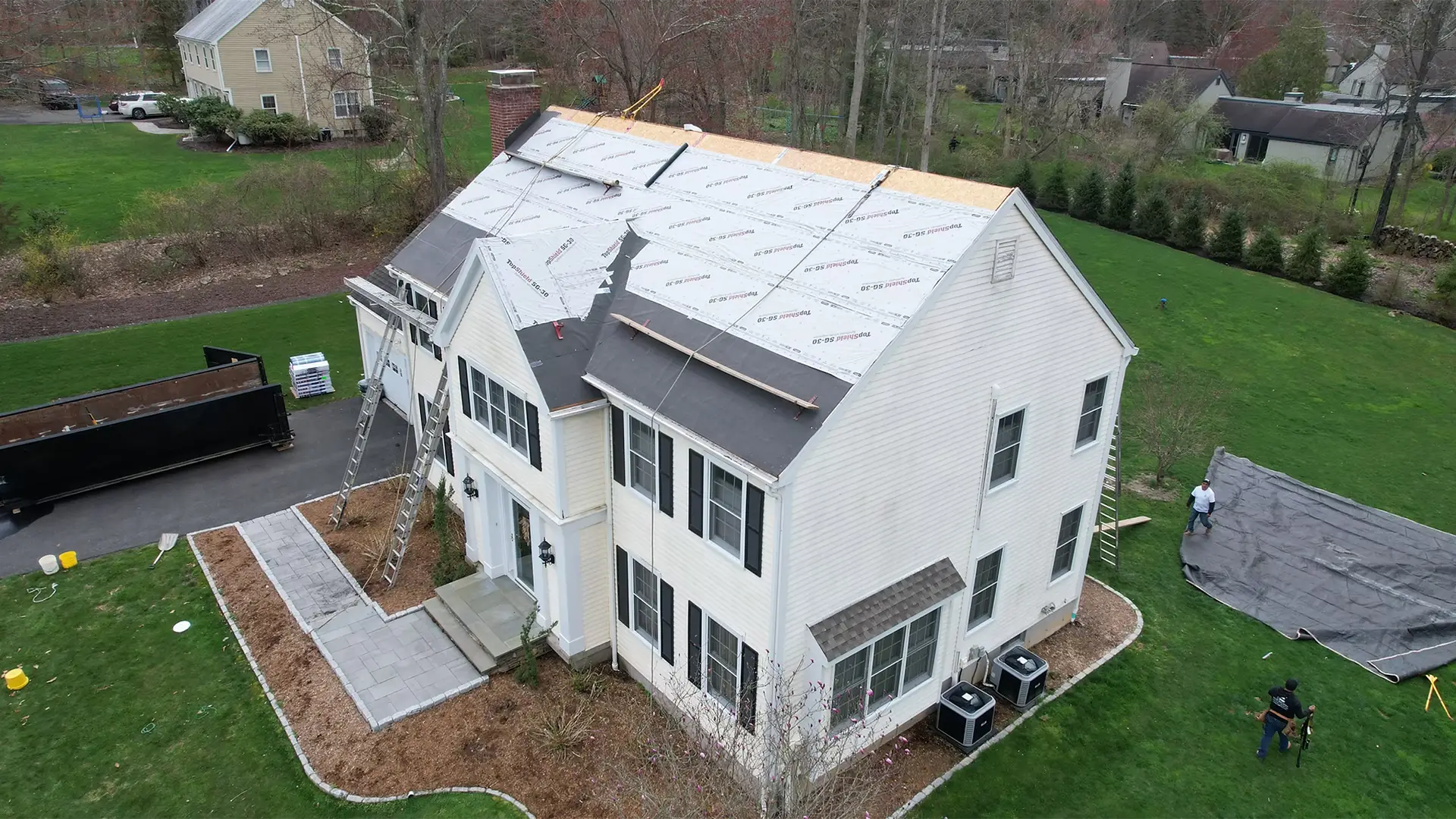
A roof emergency usually does not happen at a convenient time. It starts with water on the ceiling after a storm, a branch impact after high wind, or shingles blowing off just before another round of rain moves in. In those moments, most homeowners are trying to make decisions fast while they are also trying to protect the house from getting worse.
This guide lays out what to do before the contractor arrives, what to document, and how to think about repair versus replacement when the emergency settles down enough to evaluate the full condition of the roof.
Emergency Roof Repair at a Glance
- Protect people and the interior first. Wet ceilings, electrical areas, and unstable roof surfaces create real safety risk.
- Take photos and notes early because the first visible evidence often changes quickly once water spreads or debris shifts.
- Do not assume the visible leak is the only damaged area. Emergency conditions often affect flashing, decking, insulation, and gutters too.
- Temporary protection helps, but it is not the same thing as a finished repair plan.
- A calm, organized first response helps prioritize safety, documentation, and the next repair decision.
| Emergency Situation | Immediate Priority | What Comes Next |
|---|---|---|
| Active leak during rain | Protect the interior and contain water safely | Schedule inspection and temporary stabilization if needed |
| Missing shingles after wind | Document exposed areas and avoid roof access | Inspect for underlayment exposure and hidden edge damage |
| Branch impact | Keep clear of unstable sections | Evaluate decking, flashing, and structural risk |
| Water stain spreading fast | Move valuables and protect finishes | Trace entry point and inspect attic conditions |
| Repeated emergency calls on the same roof | Pause and evaluate overall condition | Compare repair cost against full replacement planning |
Emergency roofing is about damage control first, but the best long-term decision still depends on the full condition of the roof once the situation is stabilized.
Step 1: Protect the home and stay off the roof
If the roof is leaking, start inside. Move furniture, electronics, and anything valuable away from the affected area. Use buckets, towels, and temporary floor protection where needed. If moisture is near lights, wiring, or electrical panels, be especially careful and do not take unnecessary risks.
Outside, avoid climbing onto a wet, steep, wind-damaged, or impact-damaged roof. The priority is preventing further harm, not turning a roof emergency into a personal injury.
- Contain interior water where you safely can.
- Avoid walking under hanging branches or visibly damaged eaves.
- Take wide and close-up photos from safe positions.
- Write down when the leak or storm damage started.
Step 2: Document what you can see
Good documentation helps whether the next step is direct repair, financing, or an insurance conversation. Focus on missing shingles, branch impacts, dented metal, interior stains, soaked insulation, and any gutter or fascia damage that appeared after the event.

Step 3: Understand what a contractor should inspect
The visible entry point is rarely the whole story. Water often travels before it appears indoors, and storm-related roof damage tends to affect roof edges, flashing, valleys, gutters, and the attic in ways homeowners cannot fully assess from the ground.
- Shingle loss, creasing, punctures, and exposed underlayment.
- Flashing at chimneys, walls, skylights, and penetrations.
- Decking softness or hidden damage under impact areas.
- Attic moisture, daylight, and insulation wetness.
- Drainage details so water is not forced back under the roof edge.
Step 4: Decide whether the emergency points to repair or replacement
Some emergencies are truly limited and can be repaired well. Others simply expose that the roof was already at the end of its useful life. If the roof is aging, already patched in multiple places, or showing broad wear beyond the immediate leak, it may be smarter to plan a replacement instead of paying for repeated short-term fixes.
If you need help weighing that decision, compare this situation with roof repair versus roof replacement in Connecticut and the storm damage roof checklist.
Step 5: Plan the permanent fix
Once the immediate situation is contained, homeowners usually need a clearer plan around scope, schedule, and budget. Ellis Builders helps homeowners evaluate emergency leaks, storm damage, temporary stabilization needs, and the best path toward full repair or replacement. If budget timing matters, the company’s financing and warranties page is another useful next step.
Serving Homeowners Across Connecticut
Ellis Builders serves homeowners across Connecticut who need practical guidance after leaks, storm damage, and other roofing emergencies. Southbury and surrounding communities can start with the contact page or review service coverage on the service areas page.
Frequently Asked Questions
Should I get on the roof during an emergency?
Usually no. Wet or storm-damaged roofs are dangerous, and the safest first move is protecting the interior and documenting the problem from the ground where possible.
What should I photograph during a roof emergency?
Take photos of missing shingles, branch impacts, metal dents, interior stains, attic moisture, and anything that changed after the event.
Can an emergency leak mean I need a full roof replacement?
Yes. Some emergencies reveal that the roof was already failing broadly, which can make replacement the smarter long-term solution.
Do gutters matter during emergency roof repair?
Yes. Roof-edge drainage is often part of the problem, especially when water backs up or storms stress the gutters and fascia.
Who handles emergency roof repair in Connecticut?
Ellis Builders can inspect the roof and help you plan the right next step. Call (860) 499-4970 or use the contact page.