

After a strong Connecticut storm, the roof is often the part of the home homeowners worry about first and understand least. Missing shingles are easy to notice, but the more costly damage can hide around flashing, roof edges, gutters, attic spaces, and impact points where water has not shown up indoors yet.
This checklist is built to help you move in the right order after wind, hail, or falling branch damage. The goal is to protect the house, gather the right information, and make a smart repair decision without panic or delay.
Storm Damage Checklist at a Glance
- Start with safety. Stay off wet or unstable roof surfaces and protect the interior first if water is entering the home.
- Take clear photos from the ground and document obvious missing shingles, dented metal, fallen limbs, and interior staining.
- Do not assume the visible problem is the full problem. Wind, hail, and impact damage often affect flashing, decking, and roof edges too.
- A roof inspection can help document visible damage and compare repair or replacement scopes. Your insurer determines any insurance coverage.
- The goal is to move quickly without rushing into the wrong fix.
| What You See | Why It Matters | Immediate Next Step |
|---|---|---|
| Missing or lifted shingles | Underlayment may be exposed to water intrusion | Photograph the area and schedule an inspection quickly |
| Dented flashing, vents, or gutters | Impact damage can signal wider storm stress across the roof | Document metal surfaces and inspect surrounding roof sections |
| Tree limb impact | Hidden decking damage is possible even when surface damage looks limited | Keep clear of the area and have it professionally evaluated |
| Active water leak inside the home | Moisture can spread into insulation, drywall, and framing fast | Protect the interior and stop water entry as soon as safely possible |
| Granules collecting in gutters after a storm | Shingles may have lost protective surface material | Check overall roof wear, not just the most obvious spot |
A storm damage response is about more than patching what you can see. Good documentation and a complete inspection protect both the home and the repair decision.
Step 1: Start with safety and interior protection
After a severe storm, the first priority is safety. Stay off the roof if surfaces are wet, steep, or potentially unstable, and keep clear of power lines, hanging branches, or visibly compromised sections of the home.
If water is already entering the house, move valuables, place buckets or towels to limit interior damage, and document where the moisture is showing up. Interior stain locations can help trace where the roof system was compromised.
- Avoid climbing the roof right after the storm.
- Protect floors, furniture, and stored items below active leaks.
- Take wide photos first, then close-ups of visible damage.
- Write down when the storm occurred and what you observed immediately afterward.
Step 2: Document the damage clearly
Good documentation helps whether you are planning repairs directly or speaking with insurance. Focus on missing shingles, metal dents, cracked vents, debris impact, gutter damage, attic moisture, and any fresh ceiling or wall stains inside the home.
The more organized you are at the beginning, the easier it is to compare the visible damage with what a contractor finds during the inspection.
Step 3: Know what a contractor should inspect
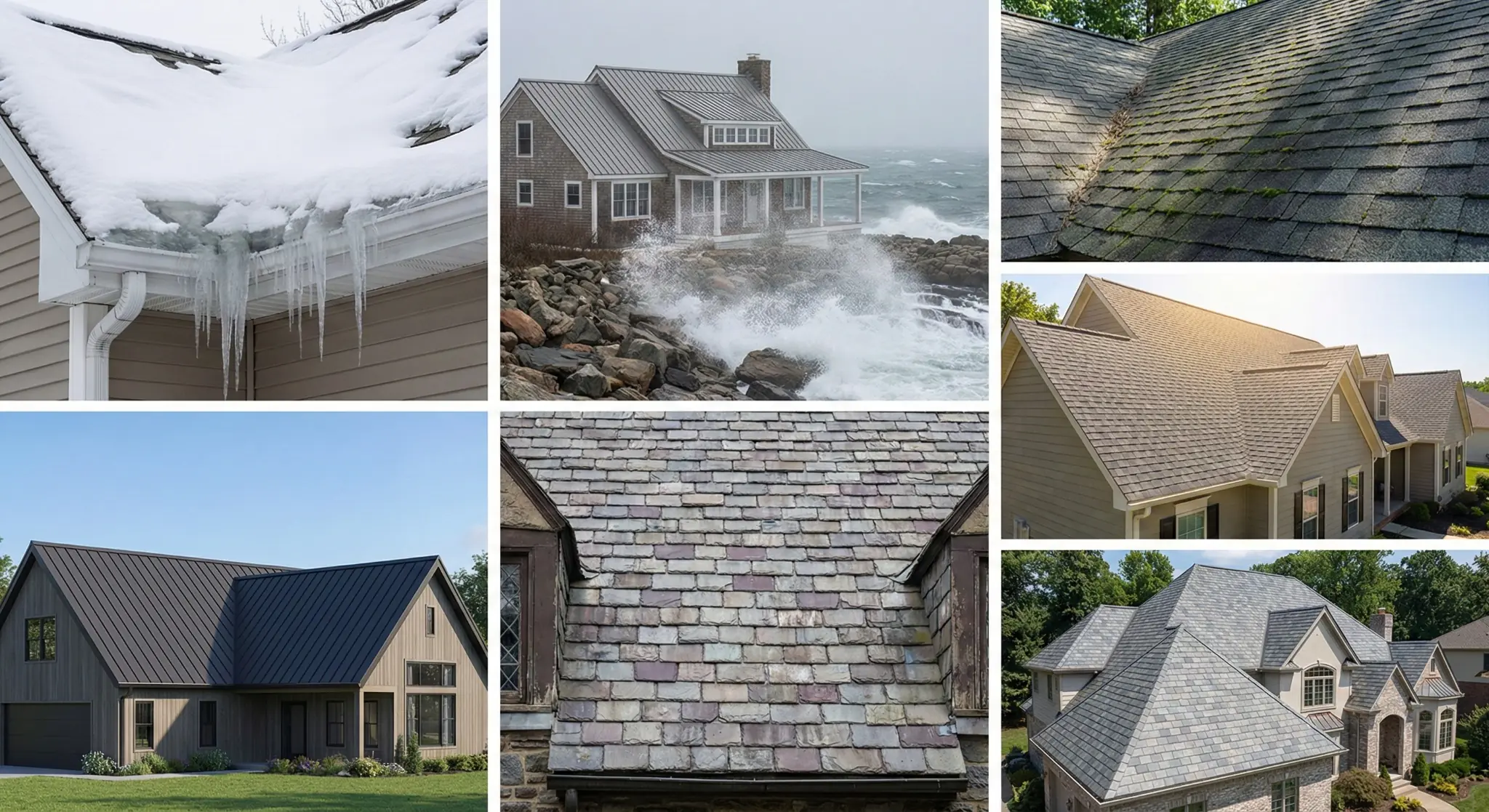
A proper storm inspection should go beyond the obvious missing shingles. Wind and impact damage often show up at ridges, valleys, flashing details, roof edges, gutters, and beneath the surface where decking or fasteners were stressed.
- Shingle creases, lifted tabs, and exposed underlayment.
- Metal flashing, vents, drip edge, and gutter dents or separation.
- Chimney, skylight, and wall transitions where leaks often begin.
- Attic moisture, daylight penetration, and insulation wetness.
- Tree limb impact points that may have damaged decking or framing.
Step 4: Decide between repair, partial replacement, or full replacement
Some storm damage is truly localized. In those cases, a targeted repair may restore the roof effectively. In other situations, the storm simply exposes an older roof that was already near the end of its service life.
If you are trying to understand that difference, compare this article with roof repair versus roof replacement in Connecticut and the Connecticut roof replacement cost guide. Those two pieces make the financial side much easier to frame.
Step 5: Move quickly without rushing the wrong fix
Storm damage usually gets worse when it is ignored, but homeowners still benefit from a calm, organized next step. The best path is fast inspection, clean documentation, and a clear scope of work based on actual condition instead of guesswork.
Ellis Builders helps Connecticut homeowners evaluate storm-related roofing damage, protect the home, and decide whether repair, replacement, or related gutter work should happen next. If financing is part of the conversation, the company’s financing page is another helpful resource.
Serving Homeowners Across Connecticut
Ellis Builders serves homeowners across Connecticut who need fast, practical help after wind, hail, heavy rain, or falling branch damage. Southbury and nearby communities throughout New Haven, Fairfield, and Litchfield County can use the contact page to schedule an inspection or visit the service areas page for more location coverage.
Frequently Asked Questions
Should I get on the roof after a storm?
Usually no. Wet or unstable roofs are dangerous, and damage is often easier to document safely from the ground until a professional inspection happens.
What kind of storm damage should I photograph?
Take photos of missing shingles, dented metal, fallen limbs, water stains, attic moisture, gutter damage, and any visible debris impact.
Can a storm turn an old roof into a replacement project?
Yes. Storm damage sometimes reveals that an aging roof was already near failure, making replacement the more dependable option.
Do gutters matter after a storm?
Absolutely. Dented or pulling gutters can signal roof-edge damage and can also make water management worse after the event.
Who can inspect storm-damaged roofs in Connecticut?
Ellis Builders can inspect storm-related roof damage and help you plan the right next step. Call (860) 499-4970 or use the contact page. Explore our roofing services for more information about project options.