
Introduction
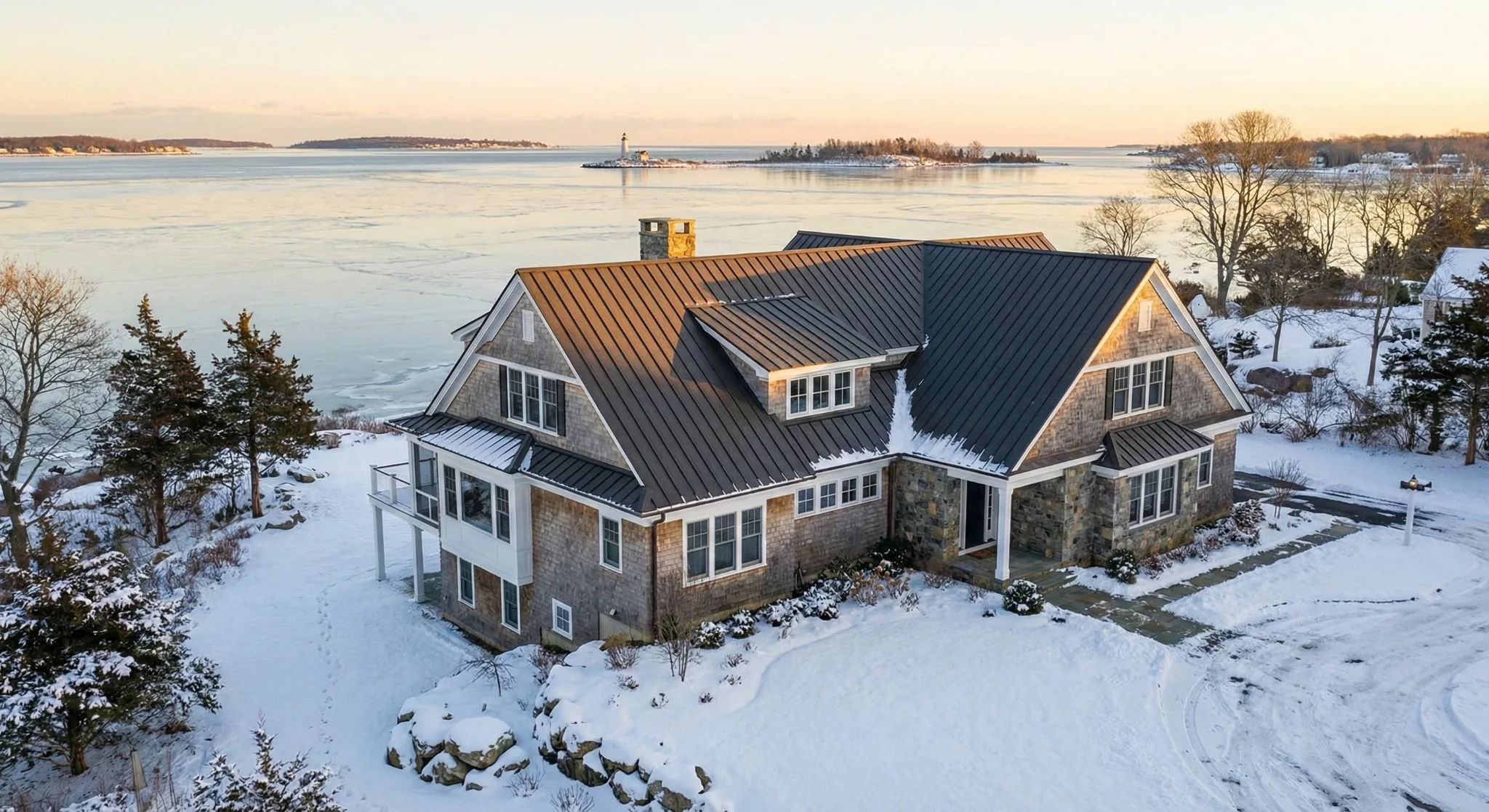
Connecticut’s weather is anything but predictable. Coastal towns like Greenwich, Stamford and Westport face salty sea air and nor’easter gusts that regularly exceed 40–50 mph. Inland communities such as Ridgefield, New Canaan and Wilton contend with heavy snow—Bridgeport averages about 33 inches of snowfall annually while Danbury and Hartford receive 49–51 inches—and frequent freeze–thaw cycles that cause ice dams and structural stress. Repeated melting and refreezing saturate shingles and flashing; water expands when frozen, widening cracks and lifting shingles. Along the coast, salt-laden spray within 5 miles of the ocean accelerates corrosion of unprotected metal roofs. Humid summers encourage moss and algae growth on shaded roofs, while extreme temperature swings cause thermal expansion and contraction of roofing materials.
Choosing the wrong roofing material in Connecticut can lead to premature failure, expensive repairs and higher insurance premiums. Ellis Builders, Fairfield County’s high-end residential roofing specialist, developed this engineering guide to help homeowners select the right roofing system for their specific micro-climate. We combine local climate data, Connecticut building-code requirements and material science to explain why one roof type outperforms another. Whether you live on the coast or inland, own a historic colonial or a modern waterfront property, this guide demystifies roofing choices for Connecticut weather.
What Connecticut Weather Does to Your Roof
Snow Load and Accumulation
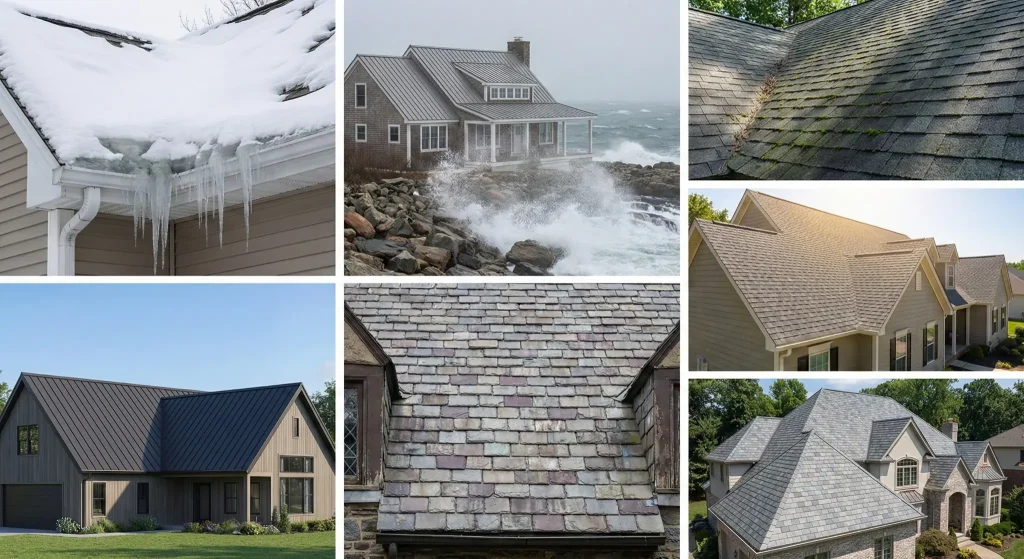
In inland towns like Danbury, Hartford and Norfolk, annual snowfall ranges from roughly 49 to 75 inches. Heavy, wet snow exerts downward pressure on roof structures, and when it melts and refreezes it can create ice dams that push water under shingles. Ice dams form when heat escaping through the roof melts the snow, which then refreezes at the eaves. These cycles can force water into tiny fissures where it freezes and expands, progressively widening cracks in shingles, flashing and masonry.
Nor’easter Winds
Connecticut experiences several nor’easters every winter. A 2025 storm produced wind gusts near 48 mph at Bridgeport and Groton airports. Inland gusts regularly reach 40–50 mph while shoreline areas can be even higher. These wind speeds create uplift forces that pry on shingles and panels; roofs without proper fastening or wind rating may suffer shingle loss or membrane failure.
Ice Dams and Freeze–Thaw Cycles
Ice dams occur when warm air in the attic melts snow, and the meltwater refreezes at the colder roof edge, forming a ridge of ice. Adequate insulation and ventilation are essential. Water penetrating small cracks in shingles and flashing freezes and expands, causing those cracks to widen. Over time the repeated freeze–thaw cycle leads to cracked, curled or lifted shingles and deteriorated flashing. Expanding ice can break apart roof decking and cause leaks.
Salt-Air Corrosion
Homes within five miles of the shoreline are exposed to salt-laden air that accelerates corrosion of metal components. Factory coatings on metal roofs may only last 10–15 years in coastal conditions, requiring re-coating to prevent rust. Aluminum is naturally corrosion-resistant, whereas galvanized steel quickly deteriorates in salt environments. A high-performance PVDF coating is recommended to protect metal from salt spray.
Moss, Algae and Humidity
Connecticut’s humid summers and shady roofs create ideal conditions for moss and algae. Moss thrives on moisture, quickly spreading on the north-facing sides of roofs. It can lift shingles, hold moisture against the roof deck and contribute to decay. Moss and lichen also trap heat, raising attic temperatures and adding weight to the roof.
Thermal Expansion and Contraction
Roofs experience dramatic temperature swings between hot summers and cold winters. Roofing materials expand when heated and contract when cooled; this thermal movement can cause buckling, warping and cracking. Metal panels, slate tiles and even asphalt shingles must be installed with room for expansion and appropriate fasteners to accommodate this movement.
Material-by-Material Analysis
Asphalt Architectural Shingles
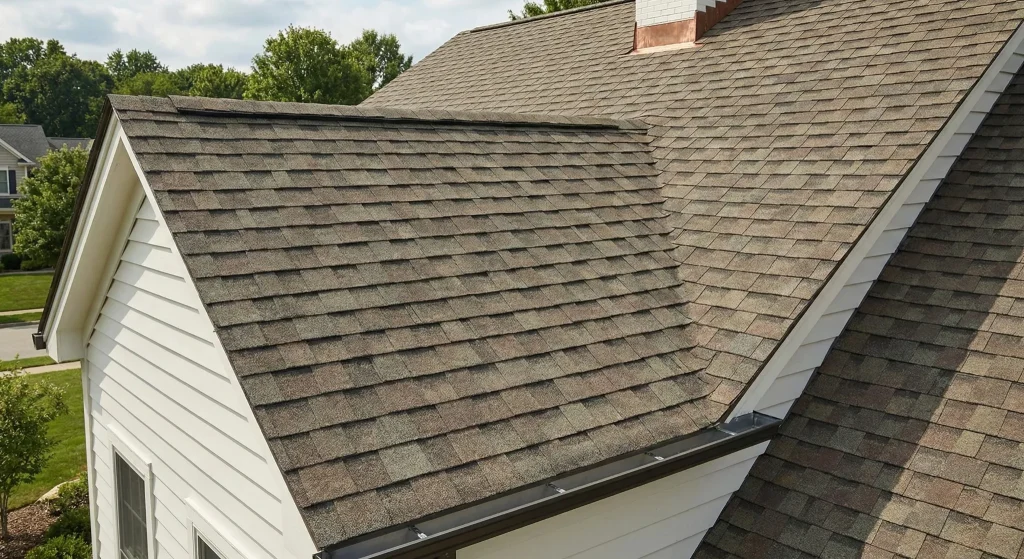
Architectural (dimensional) asphalt shingles are the most common roofing material in Connecticut. Compared with basic 3-tab shingles, architectural shingles use laminated layers for greater thickness and wind resistance. Standard 3-tab shingles typically carry 60–70 mph wind resistance and 15–20 year lifespans, whereas architectural shingles offer 110–130 mph wind ratings and 25–30 year lifespans. Luxury dimensional shingles can last 40–50 years and resist winds over 130 mph. Many Class 4 impact-resistant asphalt shingles earn a UL 2218 rating, meaning they withstand a 2-inch steel ball dropped from 20 feet without cracking. Insurers frequently offer premium discounts of 10–35% for Class 4 impact-resistant shingles.
Pros in Connecticut
- Affordability: Architectural shingles on a typical 2,000 sq ft Connecticut home cost about $9,000–$15,000.
- Decent wind resistance: Many are rated for winds up to 110–130 mph.
- Ice barrier compatibility: Asphalt roofs can be installed over ice-and-water shields extending 24 inches inside the building wall.
- Versatility: Available in many colors and profiles suited to colonial and Cape-style homes.
Cons and Limitations
- Shorter lifespan: Even premium shingles rarely exceed 40 years, and freeze–thaw cycles shorten their life.
- Vulnerability to moss and algae in humid, shaded environments.
- Not ideal for high-end coastal estates where salt spray and longevity expectations are higher.
Ideal Use-Cases: Inland towns such as Ridgefield, Wilton, Norwalk or Danbury.
Estimated Lifespan: 25–30 years (architectural), 40–50 years (luxury).
Cost Tier: Low to mid.
Standing Seam Metal Roofing
Standing seam metal roofs feature vertical panels with raised seams that interlock, creating a continuous surface. Metal roofs can withstand winds up to 180 mph, shed snow efficiently, offer fire resistance and provide a 50+ year lifespan. High-quality coatings like PVDF protect against salt corrosion.
Pros in Connecticut
- Superior wind and snow performance with strong uplift resistance.
- Longevity exceeding 50 years.
- Class A fire rating.
- Low maintenance and resistance to moss growth.
- Potential insurance savings due to durability.
Cons and Limitations
- Initial cost: $8.50–$14.50 per square foot, or roughly $17,000–$29,000 for a 2,000 sq ft roof.
- Coastal corrosion risk without proper aluminum or PVDF-coated steel.
- Snow sliding hazards requiring snow guards on steep roofs.
- Potential noise without adequate insulation.
Ideal Use-Cases: Coastal towns such as Greenwich, Stamford and Westport, as well as modern inland homes seeking longevity.
Estimated Lifespan: 50+ years.
Cost Tier: Mid to high.
Cedar Shake Roofing
Cedar shakes offer a warm, historic appearance prized on Colonial and Cape Cod homes. In Connecticut, they typically last 30–40 years and are sensitive to moisture. Heavy snowfall, spring rain and humid summers can cause moss growth and rot. Untreated shakes lack fire resistance ratings unless paired with fire-retardant treatments and appropriate underlayment.
Pros in Connecticut
- Historic charm.
- Natural insulating properties.
- Renewable material.
Cons and Limitations
- Moisture vulnerability and rot risk.
- Maintenance-intensive.
- Fire rating concerns without treatment.
- Limited suitability near the coast.
Ideal Use-Cases: Historic inland properties in towns such as New Canaan, Ridgefield and Wilton.
Estimated Lifespan: 30–40 years.
Cost Tier: Mid to high.
Natural Slate Roofing
Slate roofs represent the gold standard for longevity and elegance. Slate withstands freezing and thawing, handles heavy snow loads and can last 75–100+ years. Grade S1 slate carries a service life of about 100 years. It is fireproof, resists rot and insects, but is the heaviest roofing material available.
Pros in Connecticut
- Exceptional lifespan.
- Freeze–thaw resilience.
- High snow load capacity.
- Fireproof and low maintenance.
Cons and Limitations
- High cost: $20–$35 per square foot.
- Significant weight requiring structural evaluation.
- Specialized installation expertise required.
- Limited color palette.
Ideal Use-Cases: High-end estates and historic homes in Greenwich, New Canaan, Westport or Darien.
Estimated Lifespan: 75–100+ years.
Cost Tier: Premium.
Synthetic Slate / Composite Roofing
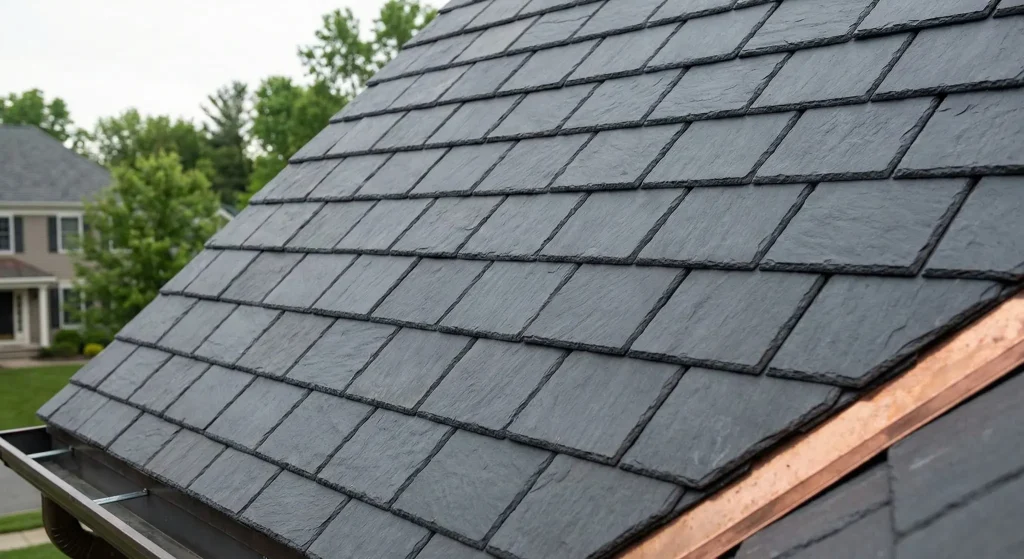
Synthetic slate replicates natural slate using engineered polymers. High-quality synthetic slate carries a UL 2218 Class 4 impact rating and may qualify for insurance discounts. Products can resist winds of 110–190 mph and achieve Class A fire ratings with proper underlayment. Composite slate is lightweight, moisture-resistant and typically lasts 40–50 years. Installation costs range from $8–$15 per square foot.
Pros in Connecticut
- High impact and wind resistance.
- Moisture and freeze–thaw resilience.
- Class A fire rating.
- Lightweight compared to natural slate.
- Lower cost than natural slate.
- Often recyclable and eco-friendly.
Cons and Limitations
- Shorter lifespan than natural slate.
- Lower-quality products may appear less authentic.
- Requires proper installation to manage thermal movement.
Ideal Use-Cases: Homes seeking slate aesthetics without structural reinforcement, especially in coastal zones.
Estimated Lifespan: 40–50 years.
Cost Tier: Mid to high.
Coastal vs Inland Connecticut
Coastal Towns (Greenwich, Stamford, Westport, Fairfield, Norwalk)
Salt air corrosion, high winds and moderate snowfall dominate. Recommended materials include aluminum or PVDF-coated standing seam metal and high-quality synthetic slate. Natural slate also performs well with corrosion-resistant flashing. Cedar shakes are generally ill-suited.
Inland Towns (Ridgefield, New Canaan, Wilton, Danbury, Hartford)
Heavier snow and freeze–thaw cycles are primary concerns. Architectural shingles with ice-and-water shields, standing seam metal, natural slate and synthetic slate all perform well when properly installed.
Mixed Exposure (Fairfield, Norwalk)
Moderate snow and occasional salt spray require versatile materials. Architectural shingles, synthetic slate and metal systems offer balanced performance when paired with proper ventilation and moisture control.
Building Code & Insurance Insights
Connecticut building code mandates ice-and-water shield extending at least 24 inches inside the building wall for asphalt shingles. Low-slope roofs require additional underlayment protection. Metal systems must achieve UL 90 wind uplift ratings. Slate must comply with ASTM C406 standards.
Building permits are required in Fairfield County towns for roof replacements, and inspections may verify insulation, ventilation and structural adequacy. Non-compliance can void warranties and insurance coverage.
Insurance companies often offer lower premiums for metal, slate and impact-resistant roofing materials. Roof age, shape and material all influence rates.
Ellis Builders’ Recommendations for Connecticut Homes
Best Budget Option
Architectural asphalt shingles rated for at least 110 mph winds, preferably Class 4 impact-resistant, paired with proper ice-and-water shields and balanced ventilation.
Best Long-Term Investment
Natural slate for 75–100+ years of service life and superior freeze–thaw resilience.
Best Coastal Option
Standing seam aluminum or PVDF-coated steel metal roofing, or high-quality synthetic slate with Class 4 rating.
Best Historic Option
Fire-treated cedar shakes for authenticity, or natural/composite slate for longevity.
Best Modern Option
Standing seam metal or synthetic slate for sleek aesthetics and durability.
Schedule a Climate-Specific Roof Consultation
Ellis Builders invites Fairfield County homeowners to schedule a free roof inspection and material consultation. Our Connecticut-licensed roofing specialists understand local weather patterns, building codes and historic-district requirements. We assist with insurance documentation, permitting and structural evaluations.
Call (203) 349-3595 to schedule your consultation.
Frequently Asked Questions
What roofing material lasts longest in Connecticut?
Natural slate offers 75–100+ years. Synthetic slate provides 40–50 years. Standing seam metal lasts over 50 years. Architectural shingles typically last 25–30 years.
Is metal roofing good for snow in Connecticut?
Yes. Standing seam metal sheds snow efficiently, reducing ice-dam risk and resisting high winds.
What roof works best near the Connecticut coast?
Corrosion-resistant materials such as aluminum standing seam metal or high-quality synthetic slate perform best.
Do Connecticut homes need ice and water shield?
Yes. Code requires ice-dam protection extending 24 inches inside the building wall.
Is slate worth it in Fairfield County?
For estate and historic homes, slate’s longevity and freeze–thaw resistance justify its premium cost.
How much does roof replacement cost in Connecticut?
The average roof replacement ranges from $6,630–$21,288 depending on size and material. Asphalt averages about $4.84 per square foot, metal $8.67 per square foot and slate $15.53 per square foot. A 2,000 sq ft asphalt roof typically costs $9,000–$15,000, while metal ranges from $17,000–$29,000.
Do impact-resistant shingles lower insurance premiums?
Yes. Many insurers offer discounts of 10–35% for Class 4 impact-resistant roofing materials.