
Connecticut Roof Leak Guide
Chimney Flashing Leak in Connecticut: Is It the Roof, the Chimney, or Both?
Seeing a roof leak around the chimney? Learn how Connecticut homeowners can separate flashing failure, masonry issues, roof wear, and repair vs replacement.
Seeing a roof leak around the chimney? Learn how Connecticut homeowners can separate flashing failure, masonry issues, roof wear, and repair vs replacement.
A ceiling stain near the fireplace, damp insulation beside the chimney, or brown mark on the wall after wind-driven rain can all point to the same frustrating question: is the leak coming from the roof, the chimney, or both?
For Connecticut homeowners, a chimney flashing leak in Connecticut is rarely just a cosmetic nuisance. Chimneys sit at one of the hardest-working roof transitions on the house. The roof moves water down the slope, the chimney interrupts that flow, the flashing has to redirect it, and the masonry has to stay sound through freeze-thaw cycles, spring rain, humid summers, snow, ice, and tree debris.
The right repair starts with diagnosis. A quick bead of sealant may slow a drip for a season, but it will not fix failed step flashing, loose counter flashing, cracked mortar, a bad chimney crown, soft roof decking, or a drainage pattern that keeps forcing water toward the chimney.
Quick Takeaways
- A roof leak around the chimney can come from flashing, masonry, shingles, underlayment, roof deck issues, or nearby drainage problems.
- Sealant-only repairs should be treated as temporary unless the flashing system is otherwise sound.
- Repeated leaks after several patches usually mean the weak point has not been rebuilt correctly.
- Connecticut freeze-thaw cycles can make small mortar, crown, and flashing gaps worse over time.
- A roof inspection should include step flashing, counter flashing, the cricket or back pan, shingles, valleys, attic staining, and visible masonry condition.
- Before approving chimney flashing or roof repair work, Connecticut homeowners should expect a written contract, clear scope, timeline, payment terms, and contractor registration details.
| What You Notice | Possible Source | What to Inspect |
|---|---|---|
| Leak appears only during wind-driven rain | Flashing gap, sidewall exposure, cracked mortar, or chimney crown issue | Counter flashing, step flashing, masonry joints, cap, and rain direction |
| Water stain is beside the chimney in the attic | Failed flashing, deteriorated underlayment, or roof deck damage | Decking, fasteners, shingle edges, flashing layers, and attic moisture marks |
| Leak keeps coming back after caulk | Underlying flashing design or masonry problem remains | Whether old flashing was replaced or simply covered |
| Chimney brick or mortar is cracked | Masonry may be admitting water above the roofline | Mortar joints, crown, cap, brick condition, and flashing tie-in |
| Roof is older and leaking in several areas | Chimney detail may be one symptom of broader roof aging | Shingle condition, granule loss, decking, ventilation, and replacement timing |
Why Chimney Flashing Leaks Are Common on Connecticut Homes
A chimney is a vertical interruption in a sloped roof. Water wants to move downhill. Flashing is the metal and waterproofing assembly that helps water move around the chimney instead of behind it. When that assembly is incomplete, worn, patched over, or disconnected from the masonry, water can reach the roof deck and interior framing.
Connecticut makes this detail work harder. Winter can freeze water in small gaps. Spring storms can push rain sideways. Shaded lots can keep roof surfaces damp. Summer humidity can slow drying in attic spaces. Mature trees can add leaves and organic debris around roof valleys, gutters, and chimney corners.
That is why the best inspection does not stop at the visible drip. It asks how water is reaching the area, what path it is taking, and what material failed first.
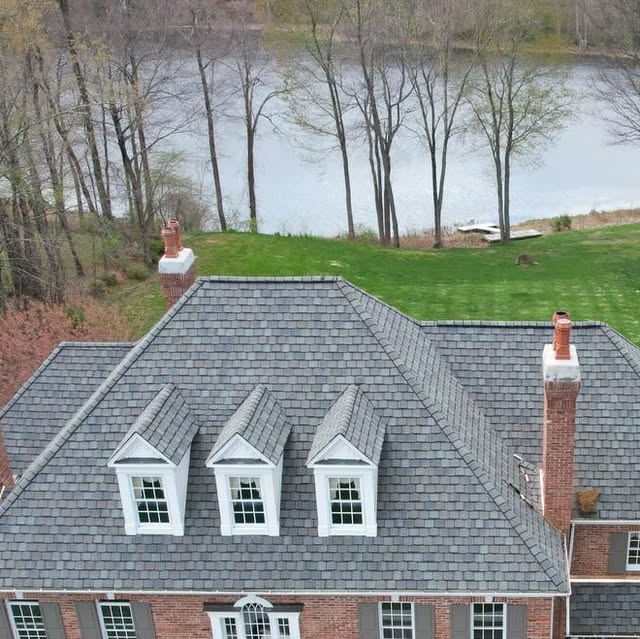
Ellis Builders recently highlighted copper counter flashing, chimney flashing, and cornice return work in its April 2026 Connecticut project recap. Details like these matter because chimney leaks are usually won or lost at the transitions homeowners cannot see from the ground.
The Main Parts of a Chimney Flashing System
Homeowners do not need to become roof mechanics, but it helps to know the language before comparing estimates. A proper chimney flashing conversation usually includes several parts.
- Step flashing: Small metal pieces woven with each course of shingles along the chimney sides so water sheds from shingle to flashing to shingle.
- Counter flashing: Metal that covers the top edge of the step flashing and ties into the chimney masonry or reglet joint.
- Apron flashing: Flashing at the lower, downhill face of the chimney.
- Back pan or cricket: A water-diverting detail behind the chimney, especially important when the chimney is wide or sits where water collects.
- Ice and water protection: A self-adhered underlayment used under shingles and around vulnerable roof transitions.
- Masonry details: Mortar joints, chimney crown, cap, brick condition, and any cracks that can let water enter above the flashing.
If an estimate simply says “seal chimney” or “repair flashing” without explaining which of these details are being addressed, ask for more clarity before moving forward.
Roof Leak or Chimney Leak? How to Separate the Clues
A roof contractor and a masonry contractor may both be partly right. Water can enter through cracked mortar above the roofline, run behind the counter flashing, and appear as a roof leak. Water can also enter through failed step flashing even when the masonry looks fine. Sometimes an older roof and an aging chimney are failing together.
Use the pattern of the leak as a starting point, not a final diagnosis:
- Leak after heavy rain from any direction: May point to larger flashing failure, roof deck weakness, or several open paths.
- Leak only with wind-driven rain: May point to sidewall flashing, counter flashing, cracked masonry, or a chimney cap issue.
- Leak after snow or ice melt: May involve ice backup, underlayment, roof-edge conditions, or ventilation and heat loss.
- Musty smell near the fireplace or attic: Moisture may be reaching framing or insulation before it stains finished surfaces.
- Fresh roof but old chimney leak remains: The scope may not have fully replaced the chimney flashing or may not have addressed masonry defects.
Ellis Builders can evaluate roof-side concerns through its Connecticut roofing services. If the roof is older and you are deciding whether a localized repair is enough, compare the findings with Ellis Builders’ roof repair versus roof replacement guide.
When a Targeted Repair May Be Enough
A targeted repair can make sense when the problem is isolated, the roof is otherwise in good condition, and the flashing assembly is mostly sound. For example, a limited repair may be reasonable when a small flashing section has lifted, a few shingles around the chimney are damaged, or a clear gap exists in one accessible spot.
Even then, the repair should be specific. The contractor should explain what was loose, missing, cracked, or exposed and why the proposed repair is expected to hold. Photos are helpful because chimney work is difficult for homeowners to verify from the driveway.
A repair is weaker when it only covers the symptom. Heavy roof cement, surface caulk, or a patch over old metal may buy time, but it can also hide the path of water and make the next inspection harder.
When Full Reflashing or Roof Replacement Should Be Discussed
Full reflashing becomes more likely when the flashing is rusted, brittle, layered over old metal, poorly tied into the chimney, missing key pieces, or leaking in more than one location. It may also be needed when previous patch work keeps failing.
In a full reflashing scope, the contractor may need to remove shingles around the chimney, inspect the roof deck, install underlayment, rebuild step flashing, install or reset counter flashing, and address the back side of the chimney so water does not collect there. If masonry work is needed, the scope should clarify whether a mason is involved or whether the roofer is only handling roof-side details.
Roof replacement enters the conversation when the leak is part of a larger system issue. If shingles are brittle, granules are heavily worn, underlayment is aged, decking is soft, attic moisture is present, or several roof areas are already failing, replacing one chimney detail may not solve the larger risk. Use Ellis Builders’ Connecticut roof replacement cost guide to understand the factors that affect a broader scope.
| Inspection Finding | Likely Path | Why It Matters |
|---|---|---|
| Small loose edge or single obvious gap | Targeted repair | The rest of the roof and flashing may still be serviceable |
| Old sealant and repeated patching | Reflashing review | The system may be shedding water incorrectly under the patch |
| Missing counter flashing or exposed step flashing edge | Rebuild flashing detail | Water can get behind the system instead of onto the roof surface |
| Cracked crown, failing mortar, or damaged brick | Masonry plus roof-side coordination | Water may enter above the flashing and travel down behind it |
| Widespread roof wear, soft deck, or multiple leaks | Replacement planning | The chimney area may be one symptom of an aging roof assembly |
What a Useful Chimney Leak Inspection Should Include
A chimney leak inspection should connect exterior observations with interior clues. The contractor should look at the roof surface, chimney transition, nearby shingles, gutters, attic, and visible staining pattern. On some homes, gutter overflow or a nearby valley can add water volume to the chimney area and make a weak detail fail faster.
Ask whether the inspection includes:
- photos of each chimney side, including the uphill side
- step flashing and counter flashing observations
- signs of old roof cement, surface caulk, or layered patching
- masonry clues such as cracked mortar, crown damage, loose brick, or missing cap details
- roof deck or attic staining near the chimney
- nearby valley, gutter, and drainage conditions
- shingle age and wear around the chimney
- whether the repair is roof-side, masonry-side, or both
If the leak appears after ice, snow, or certain attic conditions, Ellis Builders’ roof ventilation guide for Connecticut homeowners is a useful companion. If the issue surfaced during spring rain, the spring roof maintenance checklist can help you look for related warning signs.
Contract Details Connecticut Homeowners Should Confirm
Chimney flashing work is easy to misunderstand because small words can hide big differences. “Seal chimney,” “repair flashing,” and “replace flashing” are not the same scope.
Connecticut’s Department of Consumer Protection says home improvement work requires a written contract, including the contractor registration number, project dates, cancellation notice, signatures, and a completed copy for the homeowner. DCP also reminds homeowners to use registered contractors, avoid rushed pressure, verify who will obtain permits when required, and align payment terms with project progress.
Before approving roof or chimney flashing work, ask for the contract to clarify:
- whether old flashing will be removed or covered
- which sides of the chimney are included
- whether shingles around the chimney will be removed and replaced
- what underlayment or ice and water protection will be used
- whether counter flashing will be cut into masonry or otherwise secured
- how rotten decking, damaged sheathing, or masonry defects will be handled if discovered
- whether gutters, valleys, or nearby roof details affect the repair
- what warranty applies to the repair or replacement scope
For related water-management concerns, review Ellis Builders’ gutter services. Chimney leaks are often roof details, but gutters, valleys, and roof drainage can influence how much water reaches the area.
How Ellis Builders Helps Connecticut Homeowners
Ellis Builders helps Connecticut homeowners evaluate roofing and exterior water-management concerns with a practical inspection-first approach. For a chimney leak, that means looking beyond the stain and asking whether the problem is flashing, shingles, roof deck condition, ventilation, gutter behavior, masonry, or a combination of issues.
The team works across roofing, roof repair, roof replacement planning, gutters, siding, decking, and broader exterior improvements. That matters because water rarely respects trade boundaries. A chimney leak may involve the roof, the masonry, the attic, and the drainage path all at once.
Start with the contact page, review roofing services, or browse Ellis Builders’ Connecticut service areas.
Connecticut Service Area
Ellis Builders serves Connecticut homeowners who need roof inspections, chimney flashing review, roof repairs, roof replacement planning, storm-damage support, siding, gutters, decking, and related exterior improvements. If you have a leak around the chimney, the best first step is a documented inspection that separates the visible symptom from the actual water path.
FAQ
Who fixes a chimney flashing leak in Connecticut?
A roofing contractor should inspect roof-side flashing, shingles, underlayment, decking, and attic clues. A masonry contractor may be needed if the chimney crown, brick, mortar, cap, or counter flashing tie-in is failing. Some leaks require coordination between both trades.
Can I just seal around chimney flashing?
Sealant can be a short-term repair for a small, specific gap, but it should not be treated as a full solution when flashing is rusted, missing, layered over, poorly installed, or leaking in multiple places.
Why does my chimney still leak after a new roof?
The new roof may not have fully rebuilt the chimney flashing, or the leak may be entering through chimney masonry above the roofline. A focused inspection should confirm whether the flashing, counter flashing, crown, mortar, cap, or nearby roof details are responsible.
Does a chimney leak mean I need a full roof replacement?
Not always. A localized flashing repair may be enough if the roof is otherwise healthy. Replacement should be discussed when the roof is already near end of life, leaking in several areas, showing heavy wear, or has hidden deck damage.
Can Ellis Builders inspect a roof leak around my chimney?
Yes. Ellis Builders can inspect the roof-side conditions, document visible flashing and roof concerns, explain repair versus replacement options, and help homeowners understand whether additional masonry evaluation may be needed.
Next Step
Get a Connecticut exterior contractor to inspect the details before the scope is locked.
Ellis Builders helps homeowners connect roofing, gutters, siding, decking, flashing, ventilation, and water-management details so the repair or replacement plan is based on the whole exterior system.
Local Exterior Contractor
Ellis Builders in Southbury, CT
Ellis Builders is based in Southbury and serves homeowners across New Haven County, Litchfield County, Fairfield County, and surrounding Connecticut communities.
Start with the contact page, review Connecticut roofing services, or browse Ellis Builders’ service areas.

Join the discussion One Comment