Connecticut Commercial Roof Protection Guide
Rooftop HVAC Work and Commercial Roof Damage in Connecticut: What Property Managers Should Document
A service call on rooftop equipment can change the roof around it. A practical access policy, compatible materials, protected travel paths, and before-and-after records help property owners separate ordinary equipment work from roof work before a leak or warranty question appears.
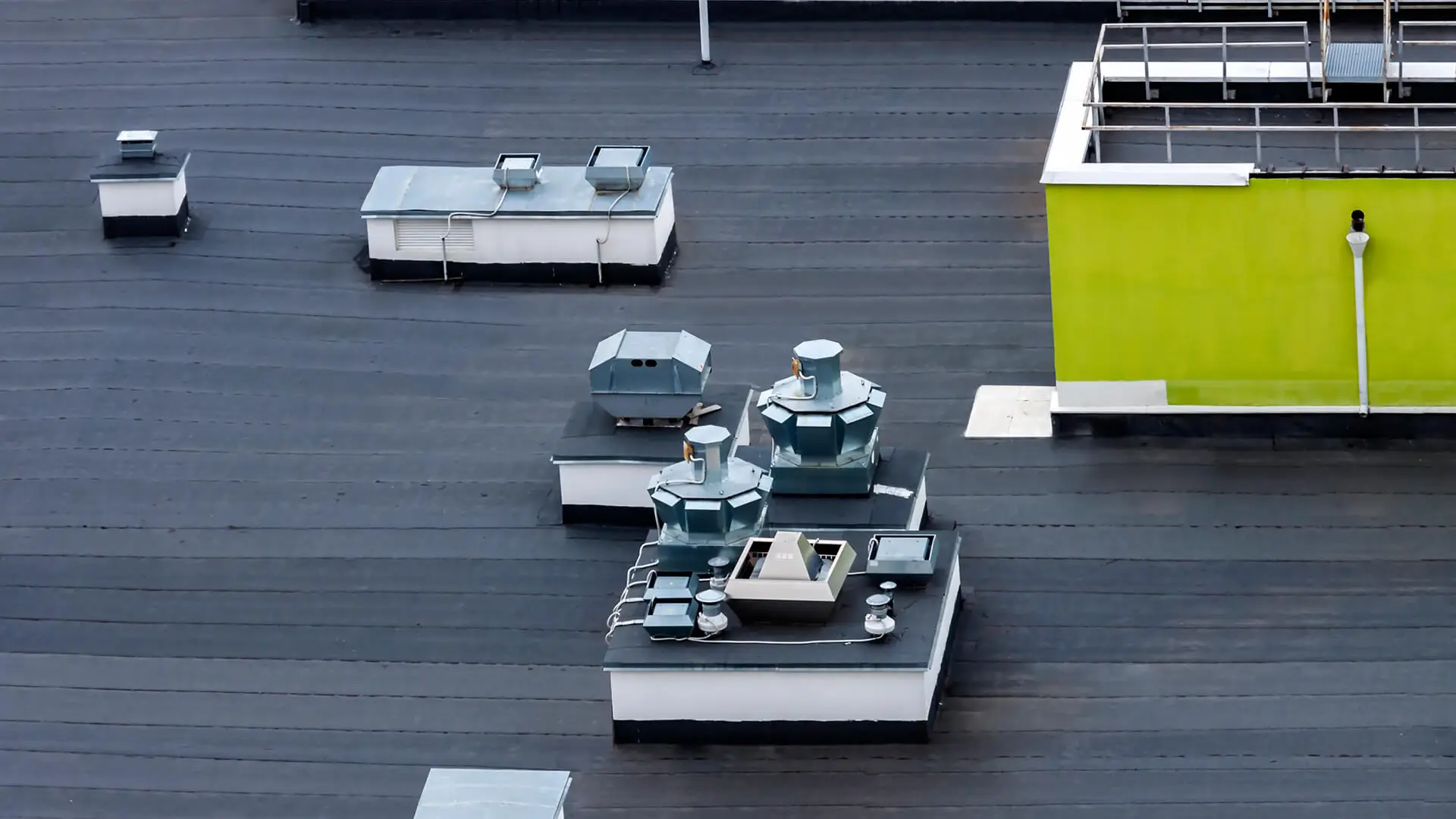
Rooftop HVAC commercial roof damage in Connecticut is often a coordination problem before it becomes a roofing problem. The mechanical contractor may be hired to restore heating or cooling, the electrician may be tracing power, a plumber may be rerouting condensate, and a crane company may be replacing a unit. Each contractor can complete its assigned task while the roof membrane, flashing, drainage, or warranty is left outside the written scope.
Commercial roofs are working platforms only when they were designed and protected for the traffic and task. A dropped panel screw can puncture a membrane. A sharp equipment door can scrape a seam. A heavy part can compress insulation below the surface. A new line set or conduit can create a penetration that requires its own support and flashing. Condensate can discharge where it keeps the roof wet. Temporary covers, packaging, filters, leaves, or cable can block a drain or scupper. Damage can also be invisible from the parking lot and may not create an interior stain until a later storm.
This guide gives building owners, property managers, associations, and facility teams a repeatable way to authorize rooftop work, document the roof before access, assign roofing responsibilities, and close the visit with useful records. It is not a reason for an untrained owner or tenant to walk the roof. Roof edges, skylights, hatches, wet membranes, snow, ice, electrical equipment, and unfamiliar surfaces require qualified contractors and an appropriate safety plan.
The Coordination Gap
The equipment contract and the roof contract must meet at the curb, penetration, and travel path.
Routine service
Filter changes, diagnostics, belts, motors, controls, cleaning, and refrigerant work can still create repeated foot traffic, open panels, tools, fluids, removed fasteners, and condensate changes around the unit.
Equipment replacement
A crane pick, curb adapter, disconnect, duct transition, piping, wiring, structural support, temporary weather protection, and final flashing may involve several contractors with separate responsibilities.
New rooftop equipment
A new opening, curb, pipe, vent, antenna, sign, solar component, or cable support changes the roof assembly. Design, permits, structure, fire and weather details, manufacturer requirements, and warranty approval may all apply.
Tenant-directed work
A tenant may authorize HVAC, kitchen exhaust, telecom, security, refrigeration, or signage work without realizing that the lease, roof warranty, or building rules restrict penetrations and rooftop access.
Emergency response
Loss of heat, cooling, refrigeration, exhaust, or communications creates urgency. A standing access process lets the response remain fast without leaving roof protection and documentation to chance.
Roofing follow-through
The roofing contractor should know what changed, which materials were disturbed, whether a temporary detail remains, and what must be inspected or repaired to return the roof to a documented condition.
The owner does not need to turn every maintenance visit into a construction project. The goal is proportional control. A technician using an established protected route to service an unchanged unit is different from a crew cutting a new opening or replacing a curb-mounted unit. The authorization process should identify the difference before access is granted.
Ellis’s commercial roof repair guide explains how membranes, seams, drainage, rooftop units, coatings, and replacement timing affect a leak decision. This guide focuses on preventing avoidable damage and preserving the records that make a later diagnosis more reliable.
Before Anyone Goes Up
Create a roof baseline and a work boundary.
Identify the roof
Record the roof area, membrane or system type if known, installation or replacement date, contractor, manufacturer, warranty number, repair history, drainage layout, access point, and sensitive areas.
Define the task
Write the exact equipment, location, reason for access, planned route, materials and tools, fluids, expected duration, crew, subcontractors, and whether any roof component will be lifted, cut, fastened, sealed, or removed.
Review restrictions
Check the roof warranty, maintenance agreement, lease, insurance requirements, owner rules, product instructions, local permits, and any requirement to use or notify the original or manufacturer-approved roofing contractor.
Photograph conditions
Capture the access point, complete route, equipment sides, curb, flashing, seams, nearby penetrations, drains, scuppers, prior patches, ponding marks, and any existing damage before work begins.
Assign roof responsibility
Name who supplies temporary protection, who makes permanent roof repairs, who inspects after service, who reports a change, and who keeps the warranty and closeout record.
Confirm safe access
The employer and qualified contractors should plan fall protection, ladder or hatch use, electrical and mechanical hazards, weather, lifting, edge control, and worker training. Building staff should not improvise this plan.
Before photos should be wide enough to show location and close enough to show condition. Include an equipment label or roof-plan reference so the image can be matched later. A hundred unlabeled close-ups are less useful than a short, organized record with date, roof area, unit number, direction, and purpose.
For planned work that changes an opening, curb, structural support, mechanical system, electrical system, or drainage path, confirm the project’s local permit and inspection requirements before ordering equipment. Connecticut’s current state building-code page identifies the adopted code cycle, while the local building department applies it to the property and scope.
Material Compatibility
A product that sticks today is not automatically a durable roof repair.
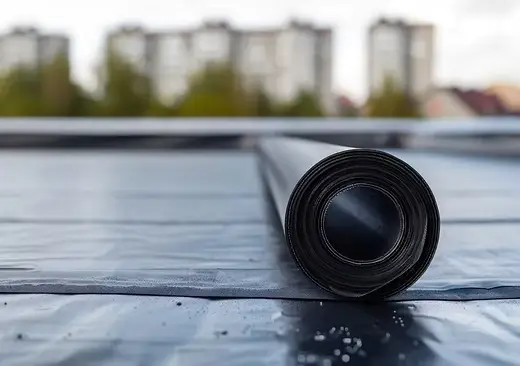
TPO, PVC, EPDM, modified bitumen, built-up roofing, coatings, metal systems, and older repaired assemblies use different preparation, primers, adhesives, heat-welded details, flashing products, and repair methods. Unidentified mastics, asphalt products, petroleum-based substances, aggressive cleaners, spray foam, or general-purpose caulk can damage or contaminate some roof materials and complicate later repairs.
The service crew should not be expected to diagnose every membrane. It should be expected to avoid unapproved roof repairs and to report anything it drops, spills, punctures, moves, opens, or adds. The roofing contractor can then select the compatible permanent detail and document it.
GAF’s commercial roof asset-management guidance recommends regular professional review for debris, water, drains, flashings, and wind-related conditions. Johns Manville’s commercial roof maintenance guide specifically addresses rooftop units, service traffic, equipment supports, condensate drainage, compatible flashing, and walk-pad protection.
Common Rooftop Work Damage Paths
Look beyond the obvious hole in the membrane.
| Condition | How service work can contribute | What the owner should require |
|---|---|---|
| Puncture, cut, or abrasion | Dropped screws, sheet-metal edges, tools, removed panels, ladders, carts, dragged equipment, or sharp debris can breach the surface. | Protected staging, magnetic and visual fastener cleanup, no dragging, immediate reporting, location photos, and a compatible roofing repair. |
| Crushed insulation or hidden deck stress | Concentrated loads from equipment, cylinders, parts, cribbing, carts, pallets, or repeated traffic can deform the assembly below the membrane. | Approved load distribution, defined staging zones, structural review when needed, and inspection for softness, dents, low spots, or changed drainage. |
| Damaged seam or flashing | Traffic beside a unit, an opened service door, tools, cables, vibration, curb-adapter work, or removed counterflashing can stress a vulnerable transition. | Pre-work seam and curb photos, temporary weather protection, roofer coordination, and final inspection around every disturbed edge. |
| Improvised penetration | New conduit, piping, drains, antenna mounts, refrigeration lines, exhaust, or controls may be routed through the roof without an approved curb or flashing plan. | Written location and detail, structural and code review, compatible permanent flashing, separation and support, permit confirmation, and warranty approval where required. |
| Unsupported pipe, wire, or cable | Lines left directly on the membrane can move, abrade, trap debris, block drainage, or concentrate load at a fitting. | Roof-compatible supports at an approved spacing and route, protected membrane, controlled movement, clear drainage, and an organized final layout. |
| Condensate or service-fluid exposure | A drain line may discharge onto the roof, become disconnected, cross a travel path, freeze, keep a seam wet, or release substances incompatible with the membrane. | A defined discharge route, compatible supports, positive flow, freeze and blockage review, no uncontrolled chemical exposure, and final operational testing. |
| Blocked drain or scupper | Packaging, filters, rags, leaves, wire, screws, sealant tubes, ice, or relocated equipment can restrict a primary or overflow path. | Debris control, drain protection that is removed before departure, final outlet check, roof sweep, and photographs showing clear drainage. |
| Open or incomplete temporary detail | A curb, cap, panel, penetration, flashing, or membrane cut may remain exposed when work stops for weather, parts, inspection, or another trade. | A written temporary dry-in method, end-of-day check, named owner, weather monitoring, emergency contact, and documented handoff until permanent closure. |
| Unrecorded roof traffic | Multiple vendors may enter through the same hatch without sign-in or photos, making later responsibility and diagnosis uncertain. | Access log, reason for entry, unit number, contractor, arrival/departure, escort or roof rules, and post-work record stored with the roof file. |
A roof can leak after service even when the new work is not the source. The technician may reveal an older curb defect, step on a previous weak repair, or be the last person on the roof before an unrelated seam opens during weather. Good records protect every party because they preserve the starting condition, the work boundary, and the evidence needed to diagnose the actual path.
Match Oversight to the Work
Routine access, equipment replacement, and new penetrations need different controls.
A curb adapter may avoid enlarging an opening, but it does not remove the need to review equipment size, height, load, duct alignment, drainage, service access, wind exposure, flashing, and the roof warranty. Reusing a curb should be a documented design and condition decision, not an assumption made after the old unit is already in the air.
If the roof itself has repeated leaks, wet insulation, widespread deterioration, chronic ponding, or an approaching capital replacement, coordinate the mechanical plan with the roof plan. Moving or replacing equipment twice can be more disruptive than aligning the projects. Ellis’s commercial roofing services and New Haven commercial roofing guide provide broader planning context.
Protected Routes and Service Zones
Walk pads help only when they match the roof and lead technicians where work actually happens.
A protected route should begin at the hatch, ladder, door, or other approved access point and continue to frequently serviced equipment. It should account for the side on which panels open, where tools are placed, where filters or belts are handled, and how the technician reaches drains, disconnects, valves, or controls.
Walk pads are not a license for unrestricted access. They must be compatible with the roof system, installed by the appropriate roofing contractor, spaced and detailed so water can drain, and inspected for movement or deterioration. An incomplete route can simply concentrate traffic at the unprotected gap. Loose pavers, scrap membrane, plywood, carpet, pallets, and other improvised covers can shift, hold moisture, abrade the roof, overload the assembly, or hide damage.
Keep roof drains, scuppers, gutters, overflow paths, seams, expansion joints, and service clearances open. If rooftop traffic is increasing because equipment is aging or more vendors are visiting, the roof-protection plan should be reviewed rather than relying on a path designed for an earlier use.
During the Work
Protect the roof without interfering with the qualified contractor’s safety and task.
Use one controlled entry
Confirm arrival, contractor, crew, equipment, roof area, unit number, work order, and emergency contact. Prevent unrelated tenants or vendors from following the crew onto the roof.
Keep a clean route
Use approved protection for travel and staging. Keep panels, filters, fasteners, packaging, cords, hoses, and tools away from edges, skylights, seams, and drainage.
Stop before the roof changes
If the field condition requires cutting, drilling, fastening, lifting flashing, moving a penetration, or applying a roof product outside the approved scope, pause and obtain the required roofing and owner direction.
Control fluids
Use appropriate containment and cleanup. Do not release oils, fuels, solvents, refrigerants, cleaning products, grease, or unknown substances onto the membrane or into roof drainage.
Keep drains functional
Protect outlets from construction debris without leaving them blocked. Remove temporary covers and verify primary and overflow paths before the crew leaves or rain arrives.
Document concealed work
Photograph openings, deck, insulation, blocking, curb, supports, penetrations, flashing layers, repairs, and temporary protection before the next layer covers them.
Owner oversight should not direct a worker to take an unsafe action. OSHA’s fall-protection resources explain that roof work presents serious fall hazards and that employers are responsible for compliant worker protection. Access controls, photo requirements, and roof rules should be coordinated with—not substituted for—the contractor’s safety program.
Closeout Before the Crew Leaves
A clean roof and an organized record are part of the finished service.
Ask for exceptions, not a vague “all good.” A useful closeout says which areas were reviewed, what changed, what was not visible, what remains temporary, and when follow-up is due. Store the record by roof area and unit number so a future leak report, warranty question, budget review, or equipment replacement can retrieve it quickly.
If a Leak Appears After Service
Protect the building, preserve evidence, and diagnose before assigning blame.
Protect people and operations
Keep occupants away from wet electrical conditions, bulging ceilings, slippery floors, damaged inventory, and active hazards. Use the appropriate emergency response.
Record the interior pattern
Note time, weather, unit operation, first visible location, spread, odor, affected materials, tenant reports, and whether the symptom changes when equipment stops.
Secure the service record
Preserve the work order, access log, contractor names, before and after photos, materials, equipment changes, temporary conditions, and communications.
Arrange qualified roof evaluation
Trace the source across the roof, curb, penetrations, condensate, drainage, seams, prior repairs, and interior path. The stain may be far from entry.
Notify the right parties
Follow the roof warranty, lease, insurance, contractor, manufacturer, and emergency-notification requirements without authorizing incompatible exploratory patches.
Close the permanent repair
Document exposure, wet materials, compatible repair, testing, drying, interior restoration, approved changes, warranty status, and future monitoring.
Do not assume that every drip near an HVAC unit is roof water. Condensate, supply or return duct conditions, piping, internal unit drainage, wind-driven rain at a curb, snow or ice, and an unrelated roof opening can produce similar interior symptoms. Likewise, do not assume that a recently serviced unit clears the roof of concern. The diagnosis should connect timing, exterior evidence, interior evidence, and the complete water path.
For a broader repair-versus-replacement decision, review Ellis’s Connecticut commercial roof repair guide. Properties with smaller low-slope additions can also use the low-slope roof guide to understand transitions, drainage, and connected roof sections.
Written Rooftop Access Policy
Give tenants and vendors one clear process before the next urgent call.
| Policy item | Practical owner language to include |
|---|---|
| Authorization | Only owner-approved contractors and authorized workers may access the roof; tenants and vendors request access through the named property contact. |
| Notice | Provide the work order, roof area, unit number, crew, time, task, subcontractors, materials, lifting needs, and proposed roof changes before access except under the defined emergency process. |
| Safety | Each employer remains responsible for worker training, access equipment, fall protection, weather limits, electrical and mechanical hazards, and compliance applicable to its work. |
| Roof protection | Use approved access routes, compatible protection, organized staging, debris and fluid controls, and no dragging, drilling, cutting, fastening, sealing, or penetration without written approval. |
| Roofing coordination | Named roofing contractor handles or approves permanent roof-system changes and performs inspections required by the owner, manufacturer, or warranty. |
| Drainage | Keep drains, scuppers, gutters, and overflow paths open; remove temporary covers and all debris before departure. |
| Documentation | Provide labeled before, during, concealed-condition, and after photos plus a written list of every changed, damaged, repaired, or temporary condition. |
| Damage reporting | Report punctures, spills, dropped objects, disturbed flashing, unexpected openings, blocked drains, unsupported lines, or soft areas immediately—before covering or leaving them. |
| Closeout | Sign out with the property contact, confirm cleanup and equipment status, identify open items, assign permanent follow-up, and submit the roof record with the invoice. |
| Emergency exception | Life safety and essential operations come first, but the emergency contractor still records access, protects the roof, reports changes, and triggers prompt roofing follow-up. |
Coordinate the policy with leases, service agreements, insurance requirements, existing warranties, local rules, and counsel where appropriate. A roof policy is an operational tool, not a substitute for a project-specific contract, safety plan, design, permit, or manufacturer instruction.
If roof drainage or exterior water management is part of the project, Ellis can also review commercial gutters and roof-edge drainage. For work that changes a roof opening or larger building scope, the Connecticut permit-planning guide offers a useful set of questions to take to the local building department.
Frequently Asked Questions
Rooftop HVAC and commercial roof protection questions Connecticut owners ask.
Can an HVAC contractor repair the roof around a unit?
Only when the contractor is qualified and authorized for that roof work and the repair follows the roof system, warranty, and project requirements. Otherwise, the HVAC contractor should protect and report the condition while the appropriate roofing contractor makes the permanent detail.
Does every HVAC service visit require a roofer?
No. Routine service on an unchanged unit may use an established protected route and owner access process. A roofer becomes more important when flashing, a curb, membrane, penetration, support, drainage, or warranty condition will be disturbed or changed.
Can a rooftop unit be replaced on the existing curb?
Sometimes, with a compatible curb or engineered adapter and a documented plan for loads, duct alignment, utilities, weather protection, service access, flashing, drainage, permits, and warranty requirements.
Who is responsible if the roof leaks after HVAC service?
Responsibility depends on the evidence, contracts, roof condition, work performed, and actual leak source. Before-and-after records and a qualified diagnosis are more reliable than assigning cause from timing alone.
Should condensate drain onto a commercial roof?
The approved route depends on the equipment, roof, plumbing and mechanical design, manufacturer requirements, local rules, and climate. It should not create uncontrolled wetting, ice, membrane incompatibility, trip hazards, or blocked drainage.
Do walk pads prevent all roof damage?
No. They can protect approved traffic routes when compatible and correctly installed, but they do not protect unplanned staging, spills, dropped tools, blocked drains, sharp debris, overloaded areas, or work beyond the path.
What photos should a property manager require?
Ask for the access point, route, equipment label, all sides of the unit, curb and flashing, nearby seams and penetrations, drainage, existing defects, concealed work, each roof change, cleanup, and matching final wide views.
What belongs in a commercial roof file?
Keep roof plans, system and installation records, warranty, inspections, maintenance, repairs, leak history, access logs, unit list, contractor contacts, permits, photos, service changes, and capital plans organized by roof area and date.
Next Step
Protect the roof before the next rooftop service call.
Ellis Builders can evaluate accessible commercial roof conditions, document equipment curbs, penetrations, traffic areas, drainage, and existing repairs, and help define whether the property needs a localized roof repair, improved service-path protection, coordinated equipment work, or broader replacement planning.
Connecticut Commercial Roofing Contractor
Ellis Builders in Southbury, CT
Ellis Builders is based at 238 Reservoir Rd in Southbury and helps commercial property owners, managers, associations, and businesses evaluate low-slope roofing, roof repairs, replacement planning, gutters, drainage, and connected exterior systems across New Haven County, Litchfield County, Fairfield County, and surrounding Connecticut communities.
Explore Connecticut commercial roofing services, review Ellis service areas, or request a commercial roof evaluation.
Owner references used in this guide include GAF’s roof asset-management and maintenance guidance, Johns Manville’s preventive commercial roof maintenance guide, OSHA’s roof fall-protection resources, and Connecticut’s current building-code page.