
Connecticut Commercial Roofing Guide
Commercial Roof Repair in Connecticut: Flat Roof Leaks, TPO, EPDM, Coatings, and Replacement Timing
Commercial roof repair in CT for flat roof leaks, TPO, EPDM, coatings, drainage, maintenance, and when replacement is smarter than another patch.
Commercial roof repair in CT for flat roof leaks, TPO, EPDM, coatings, drainage, maintenance, and when replacement is smarter than another patch.
A commercial roof leak can interrupt work, damage inventory, stain ceiling tiles, create tenant complaints, and turn a manageable repair into a bigger building-envelope problem. For Connecticut property owners, the hard part is often not finding the wet spot. The hard part is deciding whether the roof needs a targeted repair, a coating or restoration plan, more consistent maintenance, or full replacement.
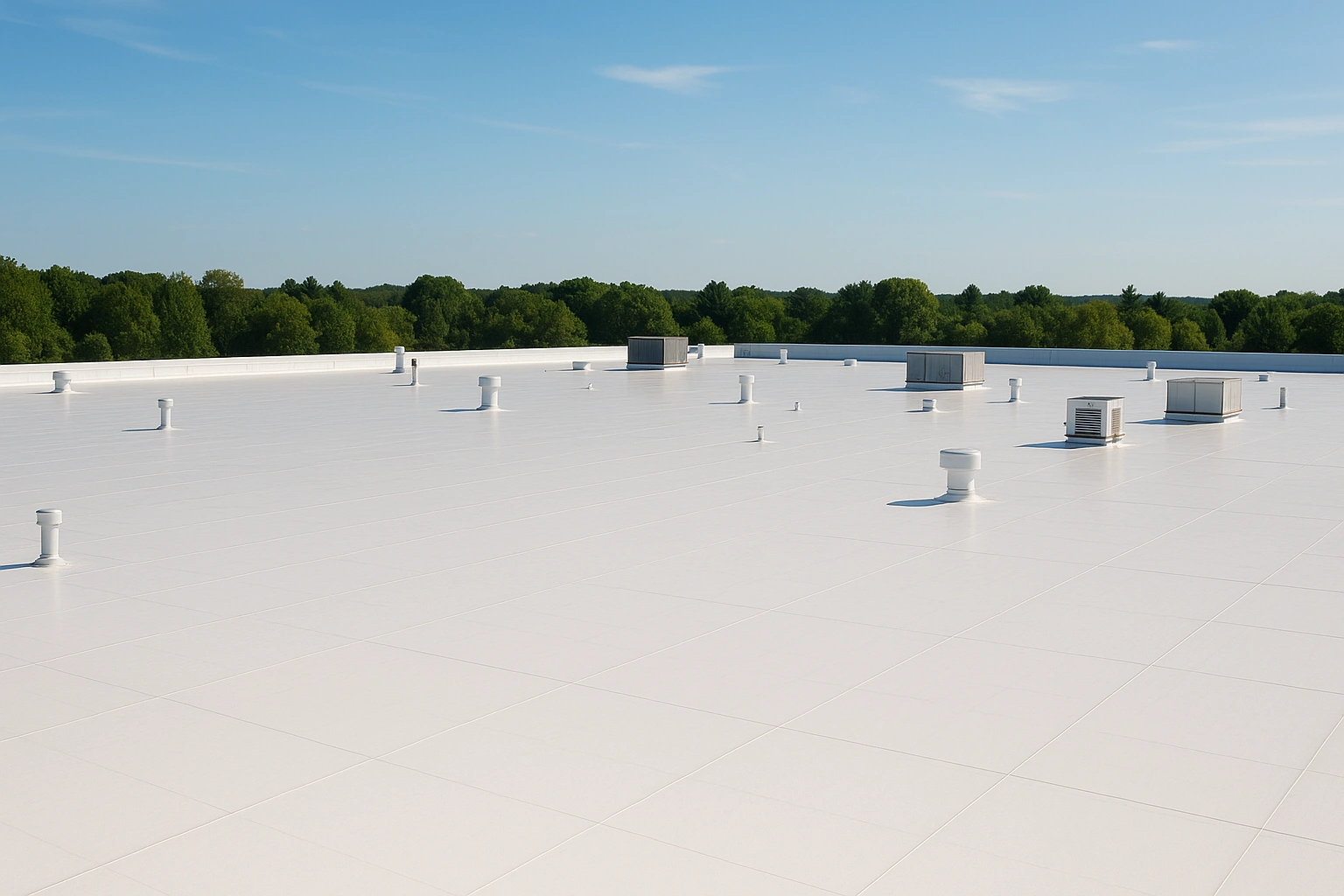
This guide explains how to think through commercial roof repair in CT for flat and low-slope roofs, including TPO, EPDM, roof coatings, drainage, rooftop penetrations, and roof-edge water management. It is written for business owners, facility managers, associations, property managers, and homeowners with low-slope roof sections who need a practical next step.
Quick Takeaways
- Commercial roof leaks often start at seams, drains, scuppers, penetrations, rooftop units, curbs, wall transitions, edge metal, or older repair areas.
- Repair can make sense when the issue is isolated and the rest of the roof system is still performing.
- Coatings can be useful in the right situation, but they are not a cure for saturated insulation, active structural problems, bad drainage, or a roof at the end of its life.
- TPO, EPDM, modified bitumen, coatings, metal roofing, and low-slope roof details each need different repair methods.
- Commercial roof inspections should document the exterior roof surface, interior leak signs, roof drainage, penetrations, edge details, and repair history.
- Ellis Builders provides commercial roofing and exterior services in Connecticut, including flat roof repair, commercial roof replacement planning, gutters, and related exterior work.
Why Commercial Roof Leaks Need a Different Process
Residential roof leaks often trace back to shingles, flashing, valleys, pipe boots, skylights, chimneys, or roof deck concerns. Commercial roofs can involve those details too, but flat and low-slope systems introduce a different set of questions.
Water may move across a membrane before entering at a seam. A ceiling stain may appear far from the actual opening. Rooftop HVAC units, drains, parapet walls, scuppers, expansion joints, old patches, and edge metal can all become leak paths. The roof may also hide wet insulation below the membrane, which changes the repair-versus-replacement decision.
That is why a commercial roof inspection should not be only a quick look at the stain. It should connect the interior symptom to roof-system conditions, drainage behavior, maintenance history, and the practical cost of another repair versus a longer-term plan.
Common Causes of Commercial Flat Roof Leaks
Flat roofs are not truly flat. They need enough slope and drainage to move water to drains, scuppers, gutters, or discharge points. When water lingers, small weaknesses can become active leaks.
| Leak Source | Why It Happens | What to Inspect |
|---|---|---|
| Membrane seam failure | Age, movement, poor installation, or stress from weather and foot traffic can open seams. | Seams, laps, patches, and nearby wet insulation risk. |
| Rooftop units and curbs | HVAC curbs and equipment penetrations interrupt the roof surface and collect water if flashing fails. | Curbs, pitch pans, sealants, counter flashing, and service traffic damage. |
| Drains, scuppers, and gutters | Clogs, poor pitch, undersized drainage, or debris can cause ponding or overflow. | Drain strainers, scuppers, gutter runs, downspouts, and discharge points. |
| Edge metal and parapet walls | Wind, movement, and aging sealants can open roof-edge details. | Coping, termination bars, wall flashing, edge metal, and fasteners. |
| Old repair patches | Temporary patches may crack, lift, or hide a deeper problem. | Compatibility with the roof system and whether the patch addressed the original leak path. |
| Ponding water | Water that does not drain can accelerate deterioration and expose weak spots. | Slope, drains, insulation condition, low spots, and recurring puddle locations. |
Repair, Coating, or Replacement?
The right answer depends on roof age, material, leak history, drainage, insulation condition, business disruption, and budget. A repair may be the best choice when the roof has one clear defect and the surrounding roof is sound. A coating or restoration plan may make sense when the existing roof is a suitable candidate and the preparation requirements can be met. Replacement becomes more likely when the roof has widespread deterioration, chronic ponding, saturated insulation, repeated leaks, or a system that has already aged beyond practical repair.
GAF’s commercial specification resources show the range of commercial systems that can be involved, including TPO, PVC, asphaltic, and coatings systems. Those systems are not interchangeable. A good contractor should understand what is already on the roof before recommending a repair material or coating.
NRCA describes roof-system maintenance as a critical factor in determining roof life and cost. In practical terms, that means Connecticut property owners should avoid making every decision under emergency leak pressure. Scheduled inspections, photo documentation, drainage cleaning, small repairs, and maintenance planning can reduce surprise costs.
TPO, EPDM, and Commercial Roof Coatings
TPO and EPDM are common commercial membrane roofing systems, especially on low-slope buildings. TPO is typically heat-welded at seams, while EPDM is a synthetic rubber membrane with its own repair and seam methods. Coatings are a different category and should be evaluated based on roof condition, surface preparation, adhesion, drainage, and manufacturer requirements.
A coating can be attractive because it may extend service life without a full tear-off in the right situation. But it should not be treated as paint for a bad roof. If water is trapped below the membrane, if the roof is poorly drained, if seams are failing widely, or if the roof substrate is not a suitable candidate, coating can delay rather than solve the problem.
For Connecticut buildings, the inspection should also consider winter conditions, freeze-thaw cycles, wind, rooftop service traffic, and how quickly the roof dries after rain or snowmelt. The roof that performs in July still has to survive February.
What a Commercial Roof Inspection Should Include
A useful inspection gives the owner something they can act on. For commercial roof repair, Ellis Builders looks for the conditions that explain both the current symptom and the future risk.
- Interior leak locations, ceiling stains, tenant reports, and timing of the leak.
- Roof membrane type, age, seams, patches, punctures, blisters, splitting, and surface wear.
- Drainage: roof drains, scuppers, gutters, downspouts, ponding areas, and debris.
- Rooftop units, curbs, pipe penetrations, vents, skylights, hatches, and service paths.
- Edge details, wall transitions, parapet walls, coping, metal flashing, and termination points.
- Whether insulation may be wet and whether the roof needs more invasive evaluation.
- Repair history, warranty considerations, maintenance records, and budget timing.
This is also where commercial roof work overlaps with exterior services. If the leak involves gutters, downspouts, wall details, siding, fascia, or roof-edge drainage, a narrow membrane patch may not be enough. Ellis Builders can connect the roof repair conversation with commercial gutter and exterior water-management services when needed.
When Replacement Is Smarter Than Another Patch
Another patch is tempting when the leak is urgent. Sometimes that is the right first move. Temporary protection can stop active water intrusion while the owner decides on a permanent plan. But repeated patching can become expensive when the roof is already failing across a larger area.
Replacement should be discussed when the roof has multiple leak areas, widespread seam failure, chronic ponding, wet insulation, deteriorated edge details, extensive old repairs, or a history of leaks after storms. It should also be considered when the building owner wants to reduce disruption, improve drainage, coordinate rooftop equipment work, or plan a longer-term capital improvement instead of recurring emergency repairs.
For a broader overview of Ellis Builders’ commercial capabilities, visit the commercial roofing services page. For property owners in the New Haven area, the commercial roofing New Haven guide is a useful companion.
Commercial Roof Maintenance in Connecticut
Maintenance is not glamorous, but it is one of the best ways to reduce surprise leak calls. A commercial roof maintenance plan can include seasonal inspections, drain and scupper review, debris removal, seam and flashing checks, rooftop unit area review, photo documentation, and small repairs before storms expose them.
For Connecticut buildings, a practical rhythm is to inspect after winter, before winter, and after major storm events. Spring inspections can catch winter damage, snowmelt issues, and debris. Fall inspections can prepare drains, gutters, scuppers, and vulnerable details before cold weather.
When a roof has tenants, inventory, office equipment, or production space below it, documentation matters. Photos, notes, repair records, and recommendations help owners make better decisions and may support insurance, budgeting, or capital planning conversations.
How Ellis Builders Helps Connecticut Property Owners
Ellis Builders provides commercial roofing and exterior services for Connecticut properties that need roof repair, roof replacement planning, coatings review, gutters, downspouts, and water-management improvements. The team is based in Southbury and serves New Haven County, Litchfield County, Fairfield County, and surrounding Connecticut communities.
For help, start with commercial roofing services, browse service areas, or use the contact page to request a consultation.
Frequently Asked Questions
Does Ellis Builders provide commercial roof repair in CT?
Yes. Ellis Builders provides commercial roof repair and exterior services for Connecticut properties, including flat roof leak inspection, roof-edge drainage, gutters, TPO and EPDM review, coatings conversations, and replacement planning.
Can a leaking commercial flat roof be repaired?
Often, yes. Repair can make sense when the leak is isolated and the surrounding roof system is still sound. Replacement becomes more likely when the roof has widespread failure, chronic ponding, saturated insulation, or repeated leaks.
Is a commercial roof coating the same as replacement?
No. A coating may extend service life in the right situation, but it is not a substitute for replacement when the roof has trapped moisture, poor drainage, major membrane failure, or unsuitable surface conditions.
What types of commercial roof problems should be inspected?
Seams, punctures, drains, scuppers, gutters, rooftop units, curbs, penetrations, edge metal, parapet walls, wall transitions, old patches, and interior leak locations should all be reviewed.
Does Ellis Builders serve commercial properties near Southbury and New Haven?
Yes. Ellis Builders serves Southbury, New Haven County, Litchfield County, Fairfield County, and surrounding Connecticut communities for commercial roofing and exterior work.
Request Commercial Roof Help
If your building has an active leak, repeated flat roof problems, ponding water, failing seams, damaged gutters, or an aging roof that may need replacement, Ellis Builders can help you sort the options clearly.
Call (860) 499-4970 or use the Ellis Builders contact page to request a commercial roofing consultation.
Next Step
Get a Connecticut exterior contractor to inspect the details before the scope is locked.
Ellis Builders helps homeowners connect roofing, gutters, siding, decking, flashing, ventilation, and water-management details so the repair or replacement plan is based on the whole exterior system.
Local Exterior Contractor
Ellis Builders in Southbury, CT
Ellis Builders is based in Southbury and serves homeowners across New Haven County, Litchfield County, Fairfield County, and surrounding Connecticut communities.
Start with the contact page, review Connecticut roofing services, or browse Ellis Builders’ service areas.
Join the discussion 2 Comments