Connecticut Commercial Property Guide
Ponding Water on a Commercial Roof in Connecticut: What Property Owners Should Know
A recurring puddle is a clue. Find out what to document, how an inspector traces the drainage path, and what a practical correction should address.
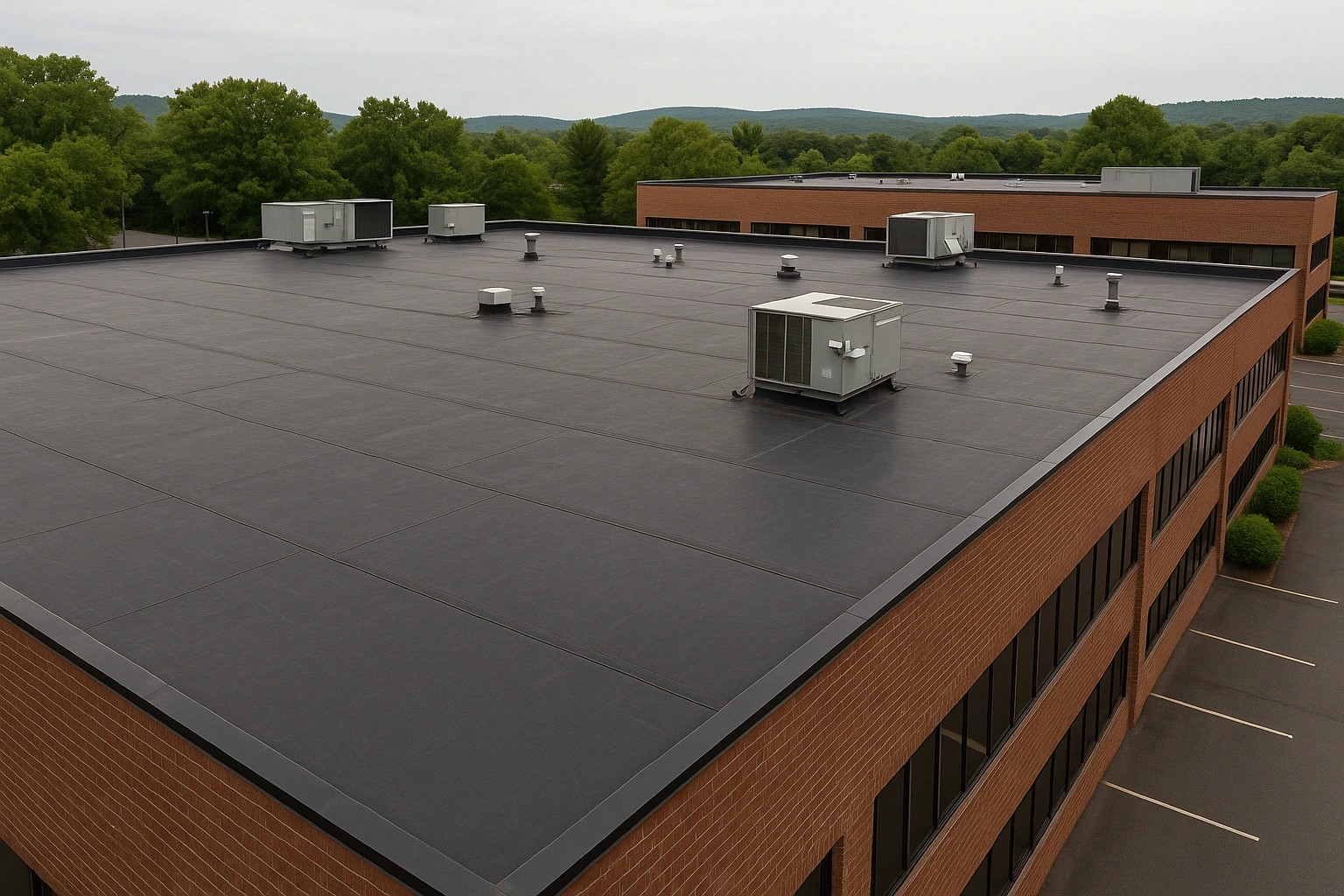
Water that repeatedly collects on a commercial roof can point to a blocked outlet, a low area, an obstruction, or a combination of conditions. The appearance of a puddle alone does not identify the cause or prove the roof needs replacement. A useful assessment follows the water across the roof and through the drainage system while checking the condition of the roof beneath it.
Many commercial buildings have low-slope roofs that drain more slowly than steep residential roofs. Weather, shade, temperature and the roof’s design affect how long water remains. A persistent pool can keep seams and repairs wet, conceal defects and add load. It also makes it harder to tell whether a small leak or wet insulation is developing beneath the surface.
Ellis Builders provides commercial roofing services in Connecticut. This guide helps owners and facilities teams organize observations and compare a clear scope with their contractor.
How Long Is Too Long?
Use the clock as a clue, not a safety threshold.
GAF’s technical advisory defines ponding as water that does not drain or dissipate within 48 hours after precipitation ends. That is a useful point for discussion, but it does not mean every puddle disappears in a precise period or that water lingering beyond it automatically proves a particular component failed. Continued precipitation, snowmelt, shade and drying conditions matter when interpreting observations.
Record when precipitation stopped, when the roof was observed and whether the same area holds water after other storms. Compare photos taken from the same safe location. A large or growing pool, an active overflow or signs of structural distress should be addressed immediately rather than observed for 48 hours. An inspector can determine what the timing means for the particular assembly and warranty.
First Response
Protect people and preserve the evidence.
Act on urgent signs
If water is rising, a ceiling or roof appears to sag, unusual cracking or movement occurs, or water approaches electrical equipment, keep people away, follow the building emergency plan and seek urgent professional assistance. Contact emergency services when appropriate.
Use safe observations
Do not walk onto a roof with suspected structural distress. Wet membranes, ice, roof edges and concealed openings present hazards. Have qualified personnel assess access and conditions.
Document the pattern
Keep dated photographs, weather information, locations of interior stains, maintenance records and reports from occupants. Mark the roof area on a plan if one is available.
Protect the interior
Move people and property away from active leaks where safe. Keep clear of wet electrical equipment and unstable ceilings; use qualified help for electrical and water-damage work.
Never block an overflow opening to stop water from discharging. Visible overflow may be an important warning that the primary drainage system is not keeping up. Our commercial overflow drain and scupper guide explains the separate role of secondary drainage.
Read the Clues
Where does the water stop moving?
| Observation | Possible explanation | What to investigate |
|---|---|---|
| Water collects around a drain | Debris, a raised drain bowl, restricted pipe or local depression | Inlet, strainer, plumbing, membrane termination and nearby slope |
| A long pool sits uphill of equipment | A curb or roof detail interrupts the drainage path | Path around the curb, existing diverter and condition of nearby flashings |
| The same low spot returns after rain | Insufficient slope, settled insulation or deck movement may be involved | Levels, construction records, insulation and structural condition |
| Water rises near a parapet or scupper | Restricted outlet or discharge path, or an undersized system | Primary and secondary outlets, downspouts and discharge point |
| Staining or soft areas accompany a pool | Moisture may have entered the assembly or an unrelated leak may exist | Membrane, seams, insulation, deck and leak history |
These patterns guide an inspection; they do not establish a diagnosis. A drain can be clear while a downstream pipe is restricted, and a low area can persist after the blockage is removed. A roof may also have more than one problem. Ask the contractor to explain how the evidence supports the proposed work.
A Useful Inspection
Trace the complete path and check the roof underneath.
Start with roof plans, warranty papers, past surveys and repair records. Identify roof sections, drains, scuppers, overflow outlets, curbs and areas where water has been seen. Note recent equipment changes, alterations or additions that may have changed the way runoff travels. A plan makes it easier to compare observations across seasons and contractors.
A qualified inspector can check whether the inlet and strainer are intact, whether debris or other materials obstruct them, and where each outlet discharges. The inspection may require a plumber when the restriction lies in a drain line. Ask how the inspector will distinguish a blocked outlet from a low area or a drain that sits above the surrounding roof surface. The goal is a continuous route for water, not simply a clean-looking opening.
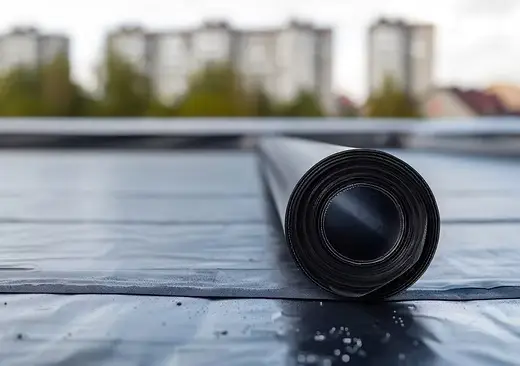
The roof surface needs attention too. An inspector can examine seams, punctures, patches, penetrations and flashings, then determine whether further moisture testing or a carefully planned opening is justified. A dry-looking membrane does not establish that insulation below is dry. Testing has limitations and the right method depends on the roof system and conditions. If a sample is taken, confirm how and when the opening will be restored and made watertight.
Large or changing depressions, visible deflection or other evidence of movement may warrant a structural engineer before corrective roofing work proceeds. A roofer should not assume that tapered insulation alone resolves a structural concern. The commercial roof movement and expansion joint guide discusses another condition that requires coordination across the building assembly.
Compare Solutions
Match the correction to the cause.
Maintenance or drain repair
Removing an accessible obstruction or repairing a damaged inlet may restore flow when the drainage route and slope are otherwise sound. Determine who will inspect the downstream line and verify discharge.
Local slope correction
A contractor may recommend a tapered assembly or a small roof cricket to direct water around an obstruction. The design must connect to a functioning outlet and fit the existing roof system and surrounding details.
Drainage changes
A revised drain, scupper or plumbing route may be appropriate after design review. Capacity, primary and overflow drainage, structural conditions and local approval must be evaluated together.
Broader roof work
Widespread wet insulation, failing membrane or deck damage can make a larger replacement or phased project appropriate. A sound local roof with an isolated problem may support a narrower repair.
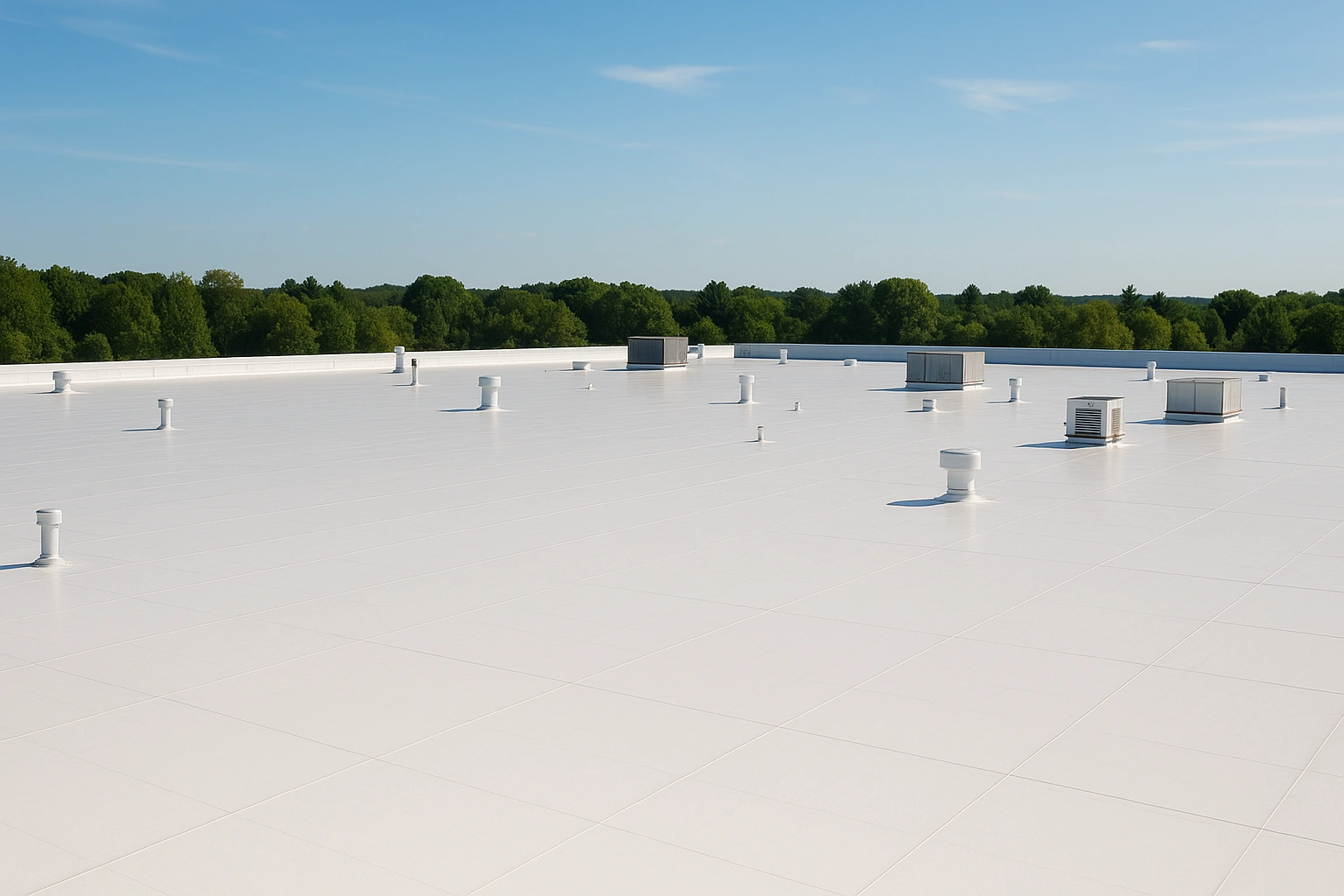
Coatings and patches can have a place in a suitable roof system, but a waterproof surface treatment alone does not restore slope or clear a restricted drain. Ask about compatibility, preparation, moisture, ponding limitations and the manufacturer’s requirements. The commercial roof repair guide compares repairs, coatings and replacement in more detail.
Changes to one roof area can affect nearby curbs, flashings, door thresholds or overflow elevations. Ask the contractor to show where the water will go after work and how all affected transitions will be restored. When a building is occupied, coordinate access, noise, weather protection and equipment shutdowns in advance; our commercial roof project checklist can help with that planning.
Your Written Proposal
Ask for a plan you can maintain.
Findings
Request a roof plan or photos locating each low area, drain, overflow and observed defect, with the likely cause and any unresolved questions.
Scope and verification
Identify the materials, drainage path, affected flashings and trade responsible for plumbing or structural review. Ask how flow will be checked after completion.
Hidden conditions
Clarify what moisture testing or removal is included, how the roof stays protected, and how additional wet insulation or deck repairs will be priced and approved.
Closeout
Obtain photos, product information, warranty documentation, maintenance responsibilities and a schedule for checking drains and discharge points.
Keep a log of future observations and maintenance, including the end of precipitation and conditions at each inspection. Avoid making comparisons from a single unusual storm. The objective is to know whether the correction changed the recurring pattern and whether the roof remains serviceable over time.
Frequently Asked Questions
Questions about commercial roof ponding.
Is standing water on a flat roof always a leak?
No. Water may remain on a low-slope roof without an immediate leak, but repeated or prolonged ponding deserves investigation because it can expose vulnerable details and may indicate a drainage problem.
Should I wait 48 hours before calling a roofer?
No. Increasing water depth, an active overflow, unusual structural movement, or signs of distress call for immediate action. The 48-hour benchmark is a way to describe ponding, not an emergency waiting period.
Will a roof coating fix ponding?
A coating does not create drainage or correct a low spot. Its suitability depends on the roof, preparation, manufacturer requirements and the condition of the assembly.
Can a clogged drain be the only cause?
Yes, a blockage can restrict drainage, but low slope, a raised drain, an obstruction, or a plumbing issue may also contribute. The full path should be evaluated.
Does ponding mean the entire roof must be replaced?
Not automatically. A localized drainage or membrane repair may be possible. Widespread wet insulation, damaged deck or recurring problems may justify a larger project.
Will ponding void my roof warranty?
Warranty terms vary by manufacturer, system and situation. Review the actual warranty and maintenance requirements, document conditions and contact the manufacturer or authorized contractor before work.
Get Help
Make a clear plan for your commercial roof.
Ellis Builders can review accessible roofing conditions, your records and the drainage concerns at your building, then discuss a practical next step.
Ellis Builders
Commercial roofing help from Southbury
Ellis Builders is located at 238 Reservoir Rd, Southbury, CT 06488. Explore our commercial roofing services or contact us to discuss your property.