Introduction
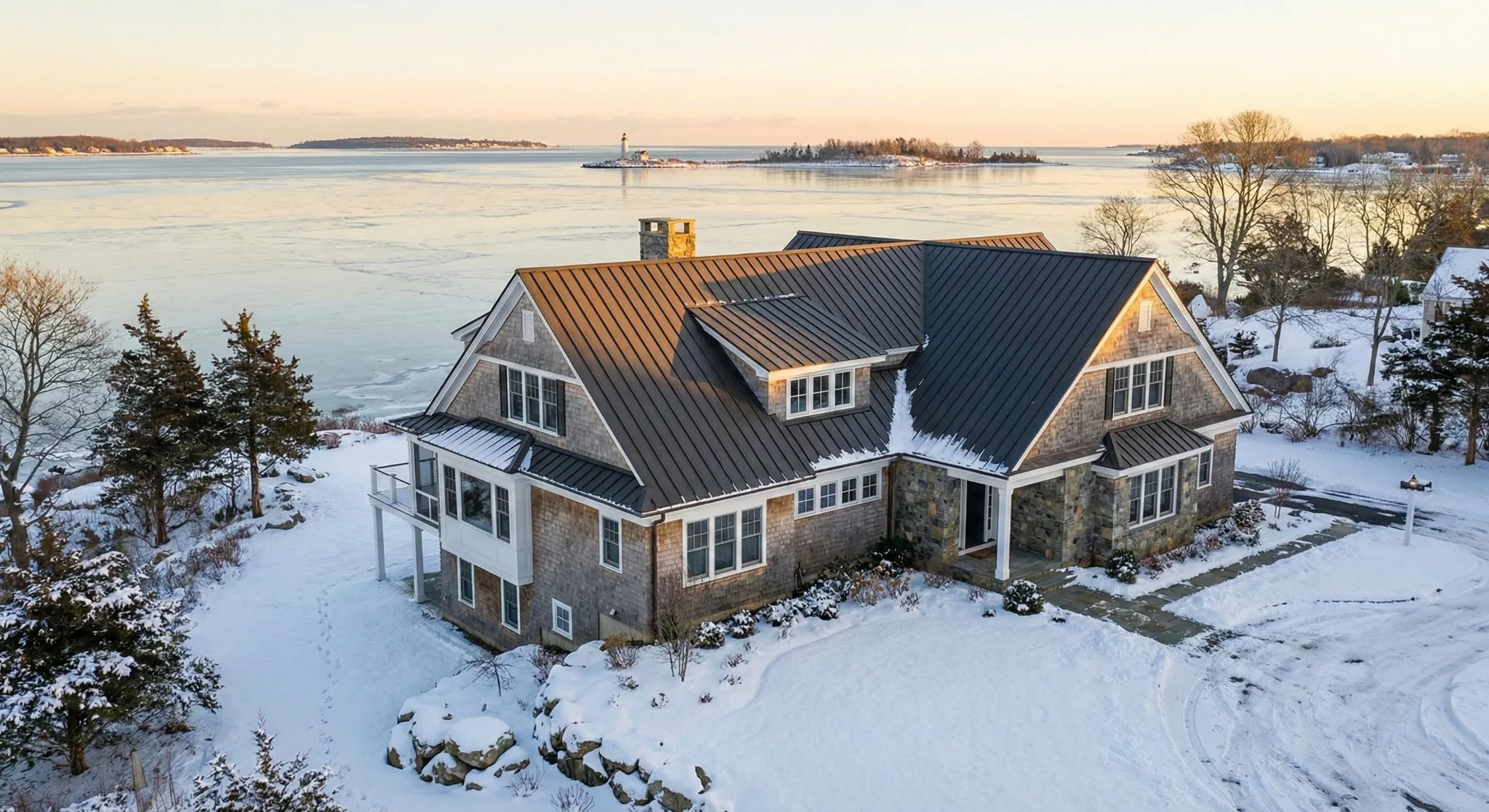
Connecticut roof planning should account for wind exposure, snow, drainage, shade, moisture, and seasonal temperature changes. Coastal and inland properties can have different conditions, and neighboring homes may need different solutions. Start with the roof’s existing condition, shape, structure, and surroundings before comparing materials.
This homeowner guide introduces roofing options and questions to discuss with a contractor. Ellis Builders can help Connecticut property owners review roof condition, materials, flashing, ventilation, and project scope. The right choice depends on the home and the specific products being proposed.
What Connecticut Weather Does to Your Roof
Snow Load and Accumulation
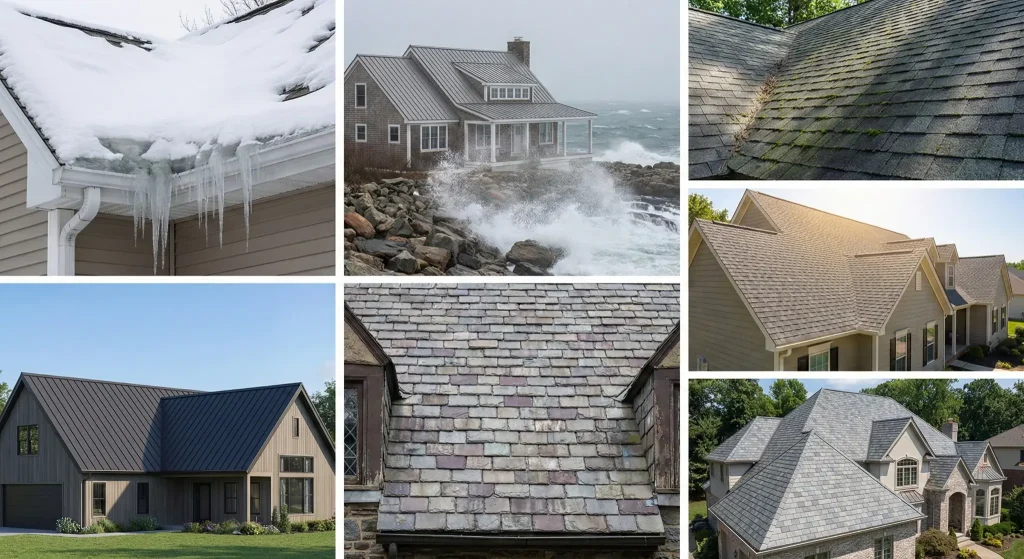
Snow accumulation and movement depend on roof geometry, weather, nearby roof levels, and site conditions. Have the supporting structure and any recurring snow or ice concerns reviewed as needed. A roofing material alone does not establish the building’s capacity or prevent ice dams.
Nor’easter Winds
Wind exposure, roof edges, attachment, decking, and the selected assembly all affect roof performance. Ask which product documentation and installation details apply to the property rather than relying on a general wind-speed claim.
Ice Dams and Freeze–Thaw Cycles
Ice-dam concerns call for review of heat loss, insulation, air sealing, ventilation, roof-edge details, and drainage. Seasonal movement can also affect roofing and flashing. Identify the source of recurring water entry before deciding whether a targeted repair or broader project is appropriate.
Salt-Air Corrosion
For coastal homes, discuss salt exposure, compatible metals, coatings, exposed edges, flashing, and the manufacturer’s care instructions. Suitability and warranty exclusions vary by product. A fixed distance from the coast does not settle which assembly is appropriate for an individual property.
Moss, Algae and Humidity
Shade, debris, and persistent moisture can contribute to roof growth and slow drying. An inspection can help distinguish surface staining from conditions affecting shingles or underlying materials. Follow product-specific cleaning guidance rather than assuming every stain requires replacement.
Thermal Expansion and Contraction
Roof assemblies need details that account for temperature-related movement. Fastening, clearances, joints, and flashing should follow the selected manufacturer’s instructions and the project design.
Roofing Materials to Discuss With Your Contractor
Asphalt Architectural Shingles
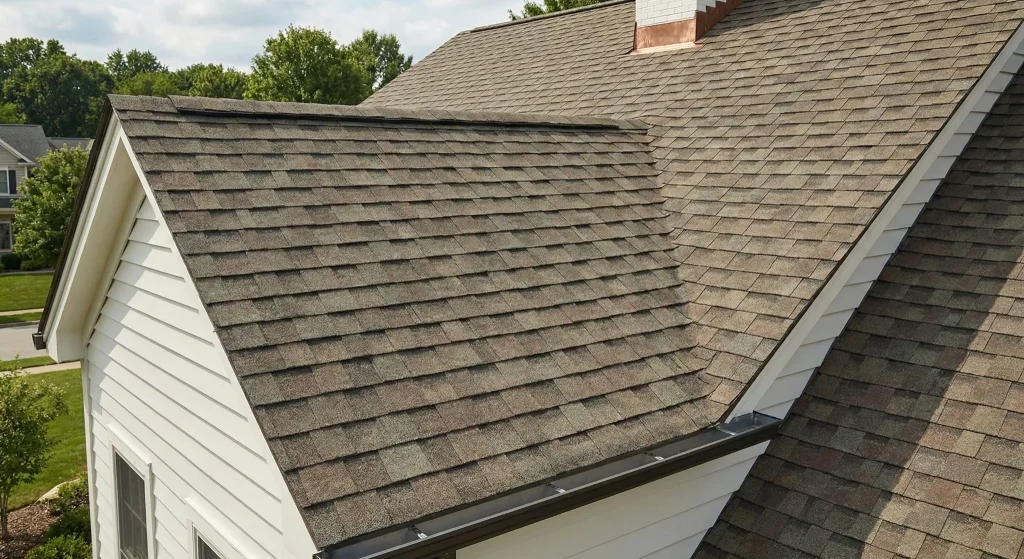
Architectural asphalt shingles are available in a range of profiles and colors. Compare the exact product line, roof-slope requirements, installation details, and documented performance information. Product ratings, service life, and warranty terms vary; they should not be generalized across all shingles.
Pros in Connecticut
- Quote factors: Roof size, removal, decking, underlayment, flashing, ventilation, access, and the selected shingle all affect the proposal.
- Wind planning: Review the fastening pattern and documented assembly requirements for the proposed product and site.
- Water-control layers: Specify compatible underlayment and roof-edge protection for the roof design and applicable requirements.
- Versatility: Available in many colors and profiles suited to colonial and Cape-style homes.
Cons and Limitations
- Service life: Condition, installation, weather, maintenance, and damage history all influence when repairs or replacement may be needed.
- Vulnerability to moss and algae in humid, shaded environments.
- Site suitability: Discuss roof slope, exposure, appearance, and product restrictions rather than choosing by town or home value alone.
Questions to ask: Which shingle and accessories are included, what preparation is planned, and how will flashing and ventilation be addressed?
Maintenance: Review the manufacturer’s guidance and existing roof conditions.
Budget: Compare complete written scopes.
Standing Seam Metal Roofing
Standing seam metal roofing uses panels joined at raised seams. Panel type, seam configuration, attachment, finish, and roof geometry should be selected together. Review drainage, snow movement, maintenance, and product-specific requirements before deciding whether it fits the home.
Pros in Connecticut
- System design: Compare the panel, seam, attachment, and supporting roof assembly for the property.
- Long-term planning: Review finish care, inspection access, compatible repairs, and written product coverage.
- Fire classification: Ask which documented classification applies to the exact proposed roof assembly.
- Maintenance: Discuss seams, flashing, finishes, drainage, and accessory inspections.
- Insurance questions: Ask your insurer how the proposed roof affects your particular policy; do not assume a discount.
Cons and Limitations
- Quote factors: Metal type, finish, panel layout, flashing, removal, deck condition, access, and accessories influence installed pricing.
- Exposure limits: Confirm product suitability, compatible accessories, and any coastal-use restrictions.
- Snow movement: Review areas below the roof and whether a compatible snow-retention design is appropriate.
- Potential noise without adequate insulation.
Questions to ask: Why does the proposed panel system fit this roof’s slope, exposure, and detailing?
Maintenance: Review finish care, flashing, drainage, and accessories.
Budget: Request a measured, project-specific estimate.
Cedar Shake Roofing
Cedar shake roofing offers a textured wood appearance. Suitability depends on the product, roof design, drying conditions, upkeep, and any applicable fire or historic requirements. Review those details and the manufacturer’s instructions before specifying the system.
Pros in Connecticut
- Historic charm.
- Distinctive wood texture and variation in appearance.
- Material sourcing and treatment options to discuss with the supplier.
Cons and Limitations
- Moisture vulnerability and rot risk.
- Maintenance-intensive.
- Confirm the documented fire classification and installation requirements for the proposed assembly.
- Review the product’s suitability for the home’s moisture and exposure conditions.
Questions to ask: What product, treatment, ventilation, and maintenance approach is proposed?
Property review: Confirm any historic or other design requirements.
Budget: Include preparation, installation, and ongoing care in the comparison.
Natural Slate Roofing
Natural slate offers a distinctive stone appearance and requires careful material selection and installation. Roof framing, slate characteristics, fasteners, flashing, access, and repair planning should be evaluated together. The covering does not establish the structure’s snow capacity or guarantee a service life.
Pros in Connecticut
- Distinctive natural texture and color variation.
- Product characteristics and exposure suitability can be reviewed before selection.
- Roof layout and structural requirements can be evaluated as part of the proposal.
- Discuss the complete assembly’s classification, flashing, and maintenance needs.
Cons and Limitations
- Quote factors: Slate selection, supporting structure, removal, flashing, access, and specialized installation affect price.
- Significant weight requiring structural evaluation.
- Specialized installation expertise required.
- Limited color palette.
Questions to ask: Is the structure suitable, what slate is specified, and how will flashings and repairs be handled?
Appearance: Review samples and any historic requirements.
Budget: Request a complete written scope.
Synthetic Slate / Composite Roofing
Synthetic slate and composite roofing products offer slate-inspired profiles with different materials and installation requirements. Compare the exact product, documented assembly information, slope limits, fastening, appearance, care, and warranty terms. Do not assume every composite product shares the same ratings or lifespan.
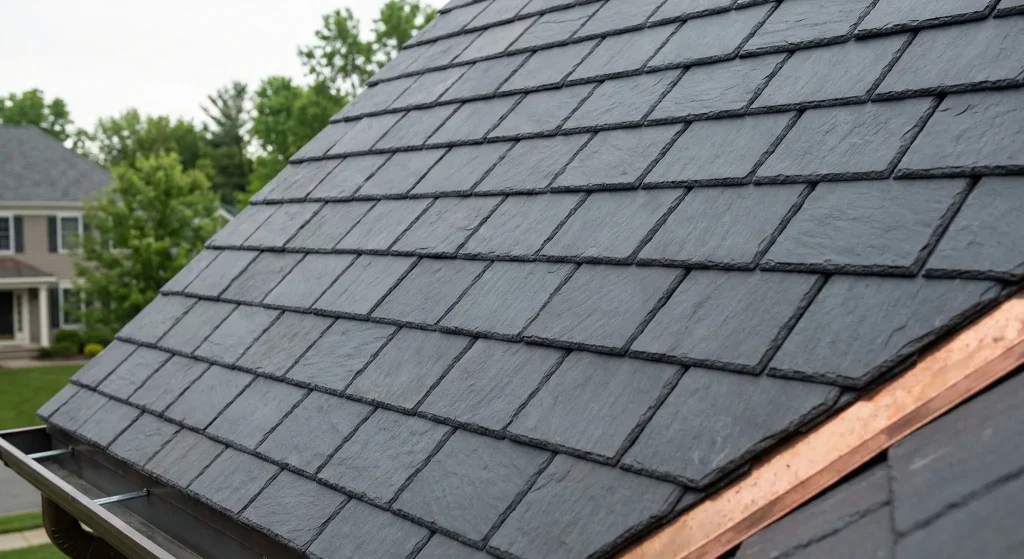
Pros in Connecticut
- Compare documented product and assembly performance for the proposed installation.
- Review moisture, temperature, and exposure requirements with the contractor.
- Fire classification: Ask which documented classification applies to the exact proposed roof assembly.
- Confirm product weight and structural suitability for the complete roof scope.
- Compare installed estimates using equivalent preparation, flashing, and accessory scopes.
- Ask about product sourcing, disposal, and available recycling options for the exact material.
Cons and Limitations
- Review service-life considerations and written coverage for the selected product.
- Lower-quality products may appear less authentic.
- Requires proper installation to manage thermal movement.
Questions to ask: Which product and assembly are proposed, and why do they suit the roof?
Property review: Confirm slope, support, fastening, and any design approvals.
Budget: Compare written proposals for the full scope.
Coastal vs Inland Connecticut
Coastal Towns (Greenwich, Stamford, Westport, Fairfield, Norwalk)
Discuss actual salt and wind exposure, compatible metals, coating limits, flashing, and maintenance. Request product-specific suitability information rather than assuming a material is appropriate for every coastal home.
Inland Towns (Ridgefield, New Canaan, Wilton, Danbury, Hartford)
Review roof geometry, snow movement, tree cover, attic conditions, drainage, and the supporting structure. Compare materials using those property details and the selected manufacturer’s requirements.
Mixed Exposure (Fairfield, Norwalk)
Individual properties can combine coastal exposure, shade, complex rooflines, and different drainage conditions. A site review helps identify the factors that should guide the roof specification.
Permits, Product Requirements, and Insurance Questions
Confirm the applicable code, permits, and inspections with the local building department. The written roof scope should identify selected products and the installation requirements relevant to the project, including underlayment, attachment, flashing, and structural review where needed.
Agree in writing on who will handle required applications and inspections. Manufacturer warranties, permit approval, and insurance coverage are separate matters; ask the appropriate provider about the terms that apply to your property.
Insurance eligibility, premiums, discounts, and coverage depend on the policy and insurer. Contact your insurer or agent before relying on a roofing product to change those terms.
Choosing a Roof Around Your Home and Priorities
Working Within a Budget
Compare complete written proposals. Review roof preparation, concealed-condition allowances, materials, flashing, ventilation, access, and cleanup alongside the total price.
Planning for Long-Term Care
Discuss maintenance access, product care, repair options, and written coverage. Avoid equating a warranty term with a promised service life or resale return.
Planning for Coastal Exposure
Ask about the exact material, finish, compatible metals, exposure restrictions, and care requirements for the property.
Working With a Historic Home
Review roof shape, material appearance, existing framing, and any required historic or association approval before selecting products.
Exploring a Contemporary Appearance
Compare samples, panel or shingle proportions, edge details, and colors while checking the technical requirements for the roof.
Schedule a Climate-Specific Roof Consultation
Ellis Builders helps Connecticut homeowners discuss roof condition, material choices, and project scope. Share your concerns and ask what an assessment would include, whether further specialist review is needed, and which next steps fit the property. Learn more about our roofing services.
Call (860) 499-4970 to request a roofing consultation.
Frequently Asked Questions
What roofing material lasts longest in Connecticut?
Service life depends on the exact product, roof design, installation, exposure, maintenance, and damage history. Compare product information and condition-based care needs rather than relying on a universal lifespan.
Is metal roofing good for snow in Connecticut?
It may suit the home, but the structure, roof geometry, attachment, drainage, and snow movement need review. A metal covering does not eliminate ice dams or determine structural snow capacity.
What roof works best near the Connecticut coast?
The answer depends on actual exposure and the product being proposed. Review material compatibility, coatings, maintenance, and manufacturer restrictions for the property.
Do Connecticut homes need ice and water shield?
Roof design, selected products, site conditions, and applicable requirements determine the water-control layers. Confirm the proposed scope with the contractor and local building department.
Is slate worth considering in Fairfield County?
Compare appearance, structural suitability, installation scope, flashing, maintenance, and budget. Slate should be evaluated for the individual home rather than selected on an assumed financial return.
How much does roof replacement cost in Connecticut?
Pricing depends on the measured roof, material selection, removal, deck condition, flashing, ventilation, access, and other project details. Request a written proposal that explains the included work, exclusions, and how concealed repairs would be priced and approved.
Do impact-resistant shingles lower insurance premiums?
Ask your insurer or agent whether the exact product and installation qualify for any change under your policy. A product rating does not by itself establish a premium discount or coverage.
Join the discussion One Comment