
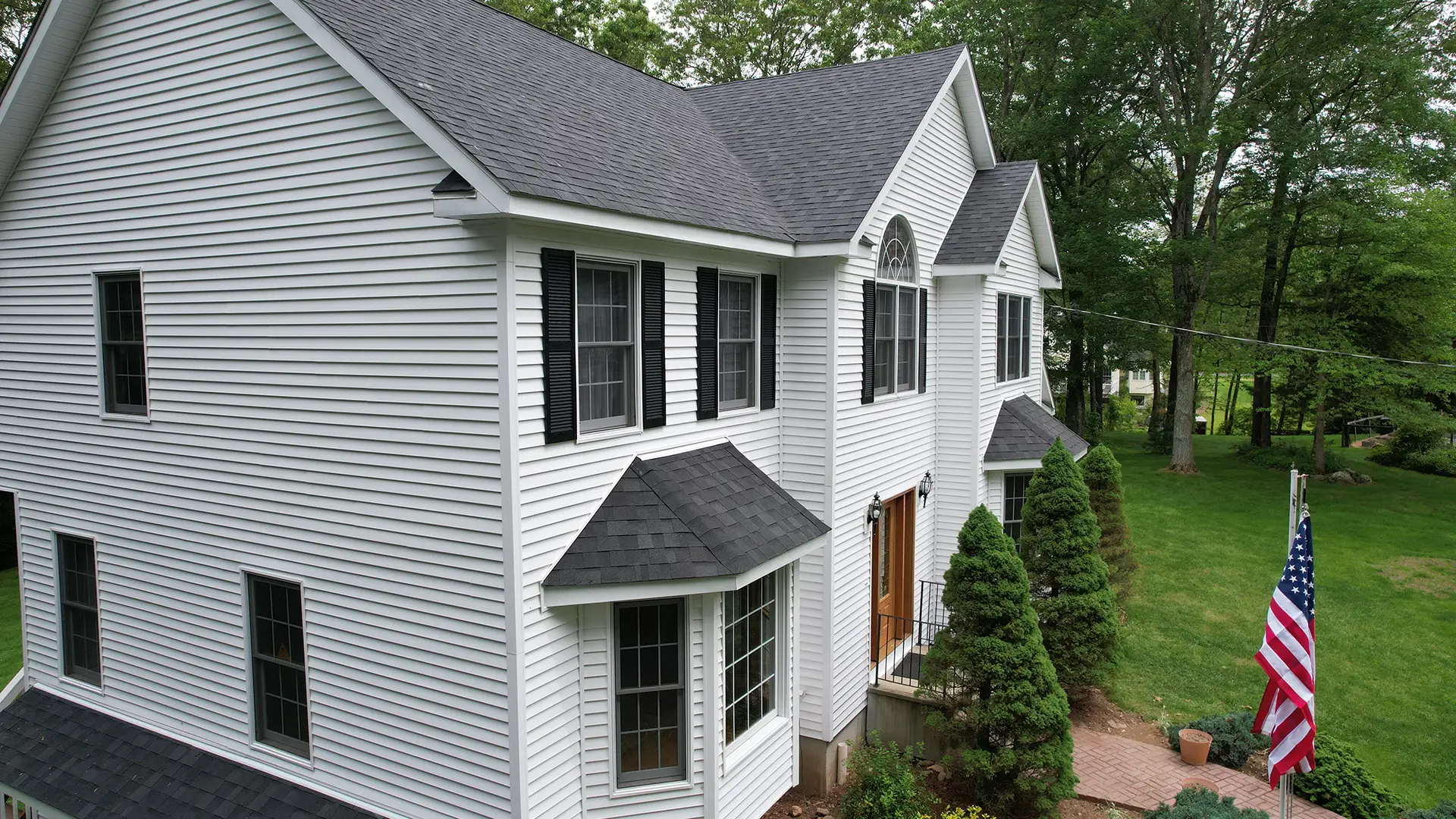
A lot of Connecticut homeowners think roof damage shows up only after a major storm. In reality, some of the most expensive problems build quietly between spring and summer, when repeated rain, warmer temperatures, attic moisture, and rising humidity start stressing the roof system from both above and below.
That transition matters because a roof can look fine from the driveway while the attic is trapping damp air, insulation is losing performance, and shingles are heating up over a ventilation problem no one has noticed yet. By the time summer thunderstorms arrive, the roof is already working from a weaker position.
The spring-to-summer transition is a useful time to review the roof and attic together. Look for water entry, air leakage, exhaust-fan routing, insulation condition, blocked vents, and roof-edge drainage before deciding which work is needed.
What Connecticut Homeowners Should Know at a Glance
- Spring rain and early summer humidity can trap moisture in attics even before a major leak appears.
- Attic moisture and comfort concerns should be evaluated alongside air leakage, insulation, exhaust fans, roof condition, and the intended ventilation design.
- Warm-season roof problems often begin at roof edges, flashing, soffits, ridge vents, and hidden attic air pathways.
- Document existing roof wear and recurring leaks so changes after rain or warm weather can be compared.
- The smartest time to fix ventilation, moisture, and roof-detail issues is before the house is under full summer weather stress.
| Problem Area | What Homeowners Notice First | What May Actually Be Happening |
|---|---|---|
| Attic humidity | Musty smell, warm upstairs rooms, damp insulation | Roof leaks, indoor air leakage, exhaust routing, insulation, and ventilation may need review |
| Roof surface wear | Granule loss, curling edges, repeated small leaks | Roof age, exposure, fastening, material condition, and attic conditions may be contributing |
| Ventilation imbalance | Hot second floor, AC running constantly, stale attic air | Intake and exhaust may be poorly balanced or blocked |
| Moisture after spring rain | Light stains or occasional damp spots | Small flashing, deck, or vent issues are staying wetter longer as humidity rises |
| Summer storm sensitivity | Roof seems to fail only during heavy rain or heat | Weather timing can help trace the entry path, but does not establish the cause by itself |
An attic and roof review can help distinguish a leak from condensation, indoor air leakage, or a ventilation concern. The repair scope should follow the observed cause and include any connected insulation or drainage work.
Why the Spring-to-Summer Shift Is Hard on Connecticut Roofs
Connecticut roofs go through a very specific seasonal sequence. Winter leaves behind wear from freeze-thaw cycles, snow load, and edge stress. Spring adds repeated rain events, wet debris, and flashing exposure. Then early summer turns up the heat and humidity before homeowners realize the roof is still carrying unresolved issues from the previous months.
That combination matters because a roof assembly does not fail from one force alone. Moisture, heat, trapped air, UV exposure, and repeated weather cycles all compound each other. A roof with even small weak points often performs much worse once the attic starts running hot and damp during humid weather.
The Hidden Attic Problem Most Homeowners Do Not Check
A lot of roof trouble in late spring and summer is really attic trouble wearing a roofing disguise. When warm, moist air cannot move out correctly, the attic starts holding heat and humidity longer than it should. That can affect the roof deck, the shingles above it, and the comfort of the living space below it.
- Moisture from showers, cooking, laundry, and daily living can rise into the attic and stay trapped.
- Blocked or unbalanced soffit and ridge ventilation can keep the attic from drying out efficiently after spring rain and humid days.
- Insulation that is damp or compressed performs worse, which can make upper floors warmer and cooling systems work harder.
- Metal fasteners, decking, and other roof components can age faster in a chronically damp attic environment.

This is where a quick “roof looks okay from outside” opinion can miss the actual issue. If the attic environment is wrong, the roof system may already be under stress even when shingles still look fairly normal from the lawn.
Warning Signs to Watch Between Late April and July
Homeowners do not need to be roofing experts to catch the early signs. The most useful clues are usually a mix of indoor comfort issues, attic clues, and small exterior symptoms that keep repeating.
- The upstairs feels hotter or stuffier than it should on warm days.
- The air conditioner seems to run hard but the upper floor still feels uncomfortable.
- There is a musty smell near attic access points or on upper ceilings after rainy stretches.
- Minor ceiling stains appear after spring rain, then seem to dry out until the next event.
- Shingles, roof edges, or flashing details have already shown wear earlier in the year.

If any of that sounds familiar, this is a good time to compare what you are seeing with the spring roof maintenance checklist and the storm damage roof checklist. Together, they help homeowners separate a simple inspection issue from a bigger warm-season roof risk.
How Heat and Humidity Affect the Roof Review
When attics overheat and stay humid, roofing materials can age faster than homeowners expect. Shingles may lose flexibility sooner, roof decks can stay damp longer after wet weather, and small flashing or sealant failures may stop drying out fully between rain events.
These symptoms do not automatically require replacement. The inspection should identify affected materials, the moisture source, available drying paths, and the work needed to address the documented condition.
- High attic heat can stress shingles from below and increase wear on already aging materials.
- Persistent humidity can contribute to mold, decking deterioration, and weaker insulation performance.
- Poor airflow can make small spring water-entry problems linger instead of drying out properly.
- Early summer thunderstorms often expose the same weak spots that humidity has already been stressing for weeks.
What to Inspect Before Summer Storm Season Ramps Up
If you want one productive exterior task list before summer, focus on the details most likely to influence moisture and airflow.
- Roof edges, flashing, and penetrations where spring rain may already have found weak points.
- Ridge vents, soffits, and other intake or exhaust areas that may be blocked, undersized, or poorly balanced.
- Attic insulation for dampness, compression, staining, or signs of long-term humidity.
- Gutters and drainage, because overflow can keep roof edges and soffits wetter than they should be.
- Any room or ceiling area that already showed a stain, damp patch, or comfort issue during spring.
Roof condition, attic airflow, and drainage should be considered together. Homeowners thinking through that full system can use the roofing page, the gutters page, and the gutter guards guide as supporting resources.
Repair, Ventilation Upgrade, or Full Roof Conversation?
Not every attic humidity or warm-season roof issue means full replacement. Sometimes the right answer is a targeted flashing repair, improved ventilation balance, or a drainage correction that stops the roof from staying wet and overheated. Other times, the warm-weather symptoms are just exposing a system that was already reaching the end of its useful life.
The biggest question is whether the home has one isolated weak point or a broader system problem. If the roof is already aging, leaking in multiple places, or showing recurring seasonal symptoms, homeowners should also compare this topic with the roof repair versus roof replacement guide and the Connecticut roof replacement cost guide.
Include Upstairs Comfort in the Inspection
Note rooms that feel unusually warm, changes in air-conditioner operation, and when discomfort occurs. Roof and attic conditions may contribute, alongside insulation, air leakage, windows, shading, and the heating and cooling system. Ask which findings support the proposed work and whether another qualified trade should evaluate related conditions.
Keep notes on when rooms feel uncomfortable, where moisture appears, and how those patterns relate to weather or household activity. That record can help the inspection address the roof, attic, insulation, and indoor conditions together.
What Ellis Builders Helps Homeowners Evaluate
Ellis Builders helps Connecticut homeowners evaluate whether a warm-season roof problem is primarily a leak, a ventilation issue, a moisture issue, or a larger replacement conversation. The proposed work should explain the observed cause, access limits, and any additional investigation needed before repairs are selected.
If you want a practical next step, the contact page is the best place to start. If budget timing matters, the financing and warranties page is also worth reviewing before bigger work begins.
Serving Homeowners Across Connecticut
Ellis Builders works with Connecticut homeowners to review moisture, ventilation, and roofing concerns and discuss repair priorities based on the condition of the home. You can also start from the Southbury roofing page, browse broader service areas, or use the contact page to schedule an inspection.
Frequently Asked Questions
Can summer humidity really affect a roof?
Yes. Humidity can contribute to a damp attic, weaker insulation performance, and slower drying around roof details that already have minor problems.
What are signs of poor attic ventilation in warm weather?
A hot upstairs, musty attic smell, repeated minor stains, and an attic that feels excessively warm and damp are common clues.
Should I inspect my roof in spring or summer?
Arrange an inspection when you notice leaks, moisture, damaged materials, or recurring comfort concerns. Seasonal checks can also help you plan maintenance, with timing based on conditions and safe access.
Does this always mean I need a new roof?
No. Sometimes a ventilation correction, flashing repair, or drainage fix is enough. In other cases, the symptoms reveal a roof that is already near replacement time.
Who can inspect roof and attic issues in Connecticut?
Ellis Builders can help homeowners review roofing, moisture, and attic-related concerns and discuss the next steps for the observed conditions. Call (860) 499-4970 or use the contact page.