
Connecticut Roof Replacement Detail Guide
Skylight Leak Repair in Connecticut: Replace, Reflash, or Remove?
A skylight can brighten a home beautifully. It can also become the weak point in a new roof if the unit, flashing, underlayment, and warranty responsibility are not decided before shingles go back on.
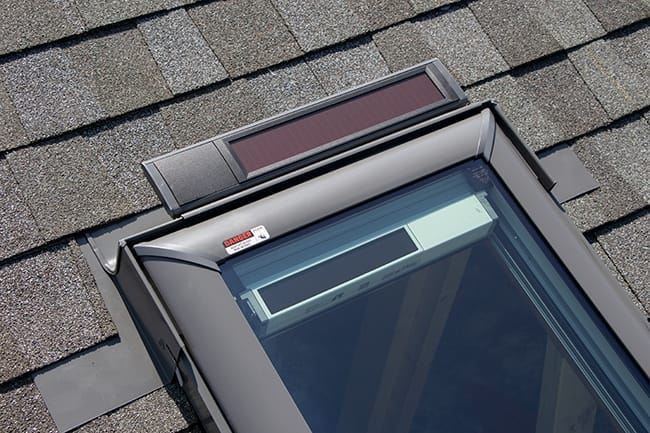
Product installation imagery sourced from VELUX USA, a skylight manufacturer used by roofing contractors.
Water stains around a skylight are not always a shingle problem. The source may be flashing, the skylight unit, condensation, underlayment, roof pitch, ice backup, or roof decking around the opening.
This guide explains skylight leak repair in Connecticut for homeowners deciding whether to repair, reflash, replace, or remove a skylight during roof work. The cleanest time to make that decision is when the roof is already open.
Start With Diagnosis
Separate the stain from the source before anyone reaches for caulk.
A roof leak usually follows rain, snowmelt, or wind direction. Condensation often appears during cold weather, humid conditions, shower use, cooking, or poor interior ventilation. Flashing work will not fix indoor humidity, and a dehumidifier will not fix failed skylight flashing.
If attic moisture, rusty nails, or winter condensation appear elsewhere, review Ellis Builders’ guide to roof ventilation in Connecticut. Skylight staining can be one clue in a larger moisture pattern.
Why Timing Matters
Roof replacement is the best moment to make the skylight decision.
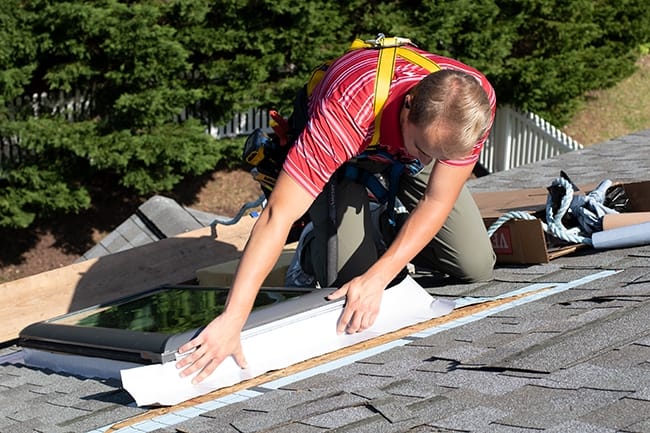
The roof is open
Old shingles, flashing, and underlayment are being removed anyway. That is when hidden deck damage and curb issues are easiest to see.
The old unit may not match
An aging skylight can leave old seals, old glass, and old flashing surrounded by brand-new roofing materials.
Future repairs disturb new work
If the skylight fails later, repair may require pulling apart fresh shingles around the opening.
Connecticut homes add freeze-thaw cycles, wind-driven rain, snowmelt, ice dams, shaded roof planes, humid summers, and heavy tree cover. A skylight detail that barely worked on an aging roof may not be the detail you want preserved for the next roof system.
Decision Guide
When to reflash, replace, or remove a skylight.
For hidden sheathing problems, see the Ellis Builders guide to roof decking replacement in Connecticut. For budgeting the larger job, use the Connecticut roof replacement cost guide.
Roof System Detail
Caulk is not a long-term skylight plan.
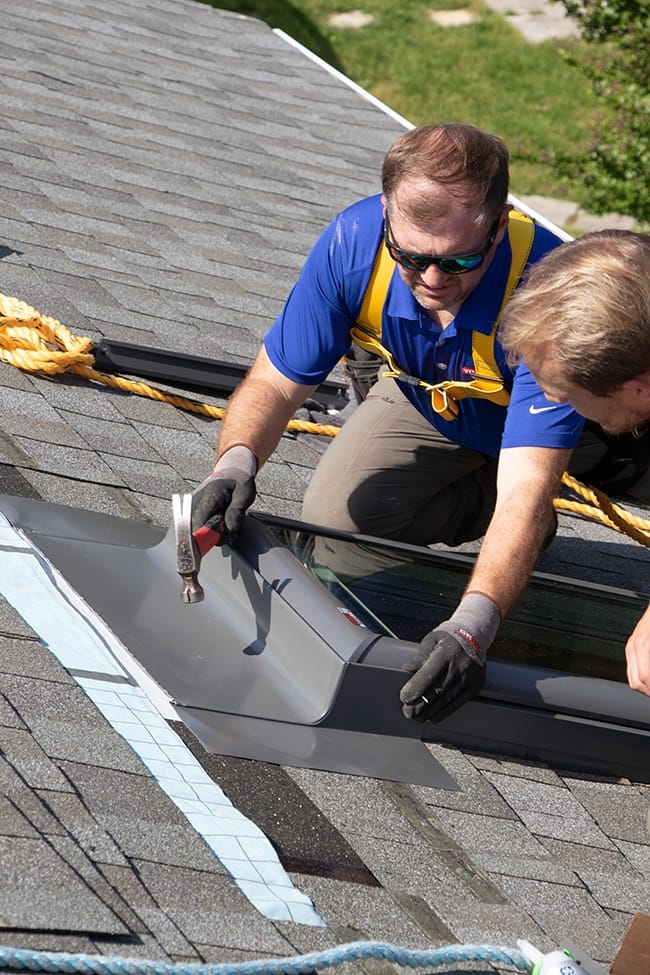
VELUX describes flashing as the first layer of defense against rain and wind, and its flashing kits are built to shed water without depending on sealants. Building America guidance also treats skylight flashing as part of the roof water-control layer.
The same thinking applies to other roof penetrations. The Ellis Builders guide to pipe boot leaks in Connecticut explains why a small opening in the roof can become a larger roof conversation when surrounding materials are aging or damaged.
Common Sources
What might be causing the leak?
| Possible source | What it means | Likely decision |
|---|---|---|
| Old or damaged flashing | Water is not being directed around the skylight correctly. | Reflash if the skylight itself is sound. |
| Failed glass seal or fogging | The insulated glass unit or skylight assembly may be failing. | Replace the skylight, not just the shingles. |
| Cracked acrylic, glass, or frame | The unit has a direct failure point. | Replace or remove the unit. |
| Improper underlayment integration | The water-control layer may not tie into the skylight correctly. | Rebuild the detail while the roof is open. |
| Low roof pitch or wrong flashing type | The product and flashing may not match the roof slope or material. | Confirm compatibility before reusing the skylight. |
| Rotten decking around the opening | Water may have damaged the roof deck or curb framing. | Repair the structure before new roofing covers it. |
| Interior condensation | Moisture may be coming from inside the home. | Address ventilation, humidity, and shaft insulation. |
Quote Checklist
Put the skylight decision in writing before roof work starts.
Connecticut DCP guidance says businesses and individuals contracting with consumers for residential home improvement work generally need to register with the Department of Consumer Protection. For homeowners, that reinforces a simple expectation: scope and responsibility should be clear.
- Is the skylight being reused, reflashed, replaced, or removed?
- If reused, who is responsible if the old skylight leaks after the roof replacement?
- Will the flashing match the skylight model, roof pitch, and roofing material?
- Will underlayment be integrated around the skylight opening?
- Will damaged decking, curb framing, or drywall be included or priced separately?
- Will photos be provided before hidden damage is covered?
- What manufacturer and workmanship warranty applies to the skylight detail?
When to Call Ellis Builders
A skylight leak should be evaluated with the whole roof, not as an isolated stain.
- Water stains near a skylight after rain or snowmelt
- Fogged, cracked, drafty, or aging skylight glass
- Old skylights in a roof replacement estimate
- Suspected soft decking around the opening
- Ice dam history near the skylight or roof edge
- A quote that does not explain skylight responsibility
If staining appears near a chimney or roof-wall transition too, read the Ellis Builders guide to chimney flashing leaks in Connecticut. If you are deciding between a small repair and a bigger project, start with roof repair versus roof replacement.
FAQ
Skylight leak repair questions.
Can a leaking skylight be repaired?
Sometimes. If the skylight unit is sound and the leak is from flashing or surrounding roof materials, reflashing may be enough. If the unit is old, fogged, cracked, or leaking through the frame, replacement is usually a better conversation.
Should I replace skylights during a roof replacement?
Often, yes, especially if the skylight is old or has a leak history. Roof replacement is the cleanest time to replace or properly reflash a skylight because the surrounding shingles and underlayment are already being rebuilt.
Can skylight stains come from condensation?
Yes. Stains near a skylight can come from indoor condensation, especially in bathrooms, kitchens, finished attics, or poorly ventilated rooms. A roof inspection should separate condensation from exterior water entry.
Is caulk enough to fix a skylight leak?
Caulk may slow water temporarily, but it is not a reliable long-term skylight repair. Skylights need correct flashing, underlayment integration, compatible roof materials, and a sound unit.
Can a skylight be removed during roof replacement?
Yes. Removal can be a good choice when a skylight has repeated leaks or no longer serves the room well. The opening needs proper framing, decking, roofing, and interior finish work.
Does Ellis Builders repair skylight leaks in Connecticut?
Ellis Builders evaluates skylight leaks as part of roof repair, roof replacement, flashing, decking, ventilation, gutters, and exterior water-management work for Connecticut homeowners.
Next Step
Plan the skylight decision before the new roof closes around it.
Ellis Builders helps Connecticut homeowners evaluate roof leaks, skylight details, flashing, roof decking, ventilation, gutters, and full roof replacement plans across Southbury, New Haven County, Litchfield County, Fairfield County, and surrounding communities.
Local Roofing Contractor
Ellis Builders in Southbury, CT
Ellis Builders is based in Southbury and serves homeowners across New Haven County, Litchfield County, Fairfield County, and surrounding Connecticut communities.
Start with the contact page, review Connecticut roofing services, or browse Ellis Builders’ service areas.

Join the discussion 2 Comments